
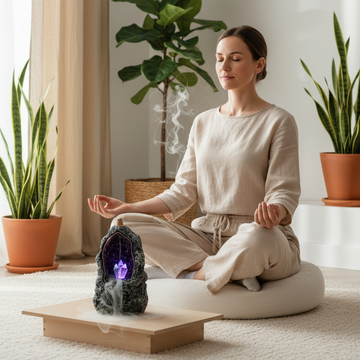

Short answer
Mindfulness meditation is the practice of paying attention to the present moment—your breath, body sensations, thoughts, and sounds—without judgment. When your mind wanders, you notice it and gently return. Over time, mindfulness can improve calm, focus, and emotional balance.
Mindfulness meditation in plain English
Mindfulness meditation is not “no thoughts.” It’s training two skills:
-
Awareness (noticing what’s happening right now)
-
Return (coming back to your anchor when you drift)
That’s it.
If your mind wanders 50 times and you return 50 times, you succeeded 50 times.
What you focus on during mindfulness meditation
Common anchors include:
-
breath at the nose or belly
-
bodily sensations (hands, feet, posture)
-
sounds in the environment
-
thoughts (observed like passing clouds)
Beginners usually start with the breath because it’s always available and simple.
The 5-minute mindfulness meditation (beginner script)
-
Sit comfortably (cushion or chair)
-
Relax shoulders and soften jaw
-
Place attention on your breath
-
When you notice thinking, silently label: “thinking”
-
Return to breath
-
Repeat until the timer ends
Optional closing:
-
Notice one feeling in your body
-
Take one deeper inhale + slow exhale
What mindfulness is NOT (common misconceptions)
-
Not forcing your mind to be blank
-
Not “being calm all the time”
-
Not judging yourself for distraction
-
Not a performance
The goal is present awareness, not perfection.
Why mindfulness helps (what changes over time)
Mindfulness helps you:
-
notice stress signals earlier
-
pause before reacting
-
reduce rumination loops
-
improve focus by training attention
Many people notice benefits in daily life first:
-
less snapping during conflict
-
more patience
-
better ability to return to tasks
The best posture for mindfulness meditation (quick guide)
-
sit on the front third of a cushion or chair
-
spine tall but not rigid
-
hands relaxed
-
eyes closed or softly open (gaze downward)
Comfort matters. Discomfort becomes the loudest “anchor” in the room.
How to stay consistent (the 2-minute minimum rule)
If you want mindfulness to work, keep it repeatable.
-
Set a daily minimum: 2 minutes
-
If you feel good, go longer
-
If you’re busy, do the minimum and keep the habit alive
Consistency beats intensity.
Internal links (recommended)
CTA (choose one)
-
Start a Beginner Routine → https://zensoullab.com/blogs/news/blogs-meditation-what-is-mindfulness-meditation
-
Shop Meditation Essentials → https://zensoullab.com/collections/backflow-incense-burner
FAQ
Is mindfulness meditation religious?
No. It’s a mental training practice that can be used by anyone.
Can I do mindfulness meditation with eyes open?
Yes—use a soft gaze on a point in front of you.
What if I feel more anxious when I sit still?
Start shorter (1–3 minutes), keep eyes open, and focus on grounding sensations like feet on the floor.