
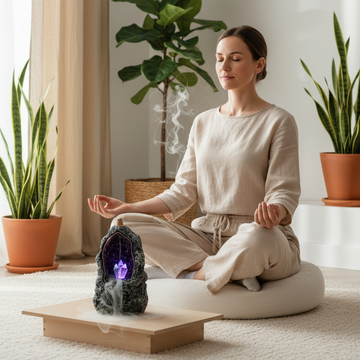

Short answer
To start meditating, sit comfortably, choose a simple anchor like your breath, and gently return your attention whenever your mind wanders. Begin with 5 minutes a day for one week. The goal isn’t to stop thoughts—it’s to notice them and come back without judgment.
First: what beginners get wrong (so you don’t)
Most beginners quit because they expect:
-
A completely quiet mind
-
Instant calm
-
A “perfect” posture
-
A magical feeling every session
Real meditation looks more like:
-
Thoughts arise
-
You notice
-
You return
-
Repeat
That repetition is success.
Step-by-step: the easiest beginner meditation (5 minutes)
Step 1: Choose your seat (comfort first)
-
Sit on a cushion or chair
-
Keep your spine tall but not stiff
-
Relax shoulders and jaw
If the floor hurts, use a chair. Meditation is not a flexibility contest.
Step 2: Pick one anchor
Choose one:
-
Breath at the nose
-
Rise and fall of the belly
-
Sound (fan noise, distant traffic)
-
A simple phrase (e.g., “in… out…”)
Breath is the most common because it’s always available.
Step 3: Practice the cycle
For 5 minutes:
-
Notice breath
-
Mind wanders (normal)
-
Label softly: “thinking”
-
Return to breath
If you do this 20 times, you did it right.
Step 4: End gently
Open your eyes slowly. Notice:
-
One physical sensation
-
One emotion
-
One thought
This builds awareness beyond the meditation itself.
A beginner-friendly routine you can actually keep
Use the “minimum effective dose” approach:
-
Week 1: 5 minutes/day
-
Week 2: 8–10 minutes/day
-
Week 3: 12–15 minutes/day
If life is hectic, keep 5 minutes and protect consistency.
What to do when your mind won’t stop
Try one of these:
-
Count breaths: inhale 1, exhale 1… up to 10, then restart
-
Longer exhale: inhale 4, exhale 6
-
Body scan: move attention from forehead → shoulders → chest → belly → legs
When focus is hard, structure helps.
What if you feel “nothing”?
That’s common. Meditation is subtle at first. Look for small shifts:
-
You pause before reacting
-
You fall asleep slightly faster
-
You notice tension sooner
-
You return from stress more quickly
Progress is often quieter than expected.
Posture tips (without obsession)
A simple posture checklist:
-
Hips supported (slightly elevated helps)
-
Spine long
-
Chin slightly tucked (neutral neck)
-
Hands relaxed
-
Eyes closed or softly open
If you feel pain, adjust. Comfort supports focus.
How to make meditation feel easier (environment + ritual)
Your brain loves cues. Choose one small ritual:
-
Light incense (if you enjoy it)
-
Sit in the same spot
-
Use the same cushion
-
Put phone on silent and out of reach
The ritual reduces decision fatigue: “It’s time.”
Internal links (recommended)
-
Best Meditation Posture: How to Sit Comfortably Without Pain
-
How to Create a Meditation Space at Home (Simple, Cozy, and Minimal)
CTA
-
Explore Meditation Essentials → https://zensoullab.com/
FAQ
Do I need an app to meditate?
No. Apps can help with guidance, but all you need is a timer and a simple anchor like breath.
Should I meditate sitting or lying down?
Sitting helps you stay alert. Lying down is great for bedtime relaxation or yoga nidra.
What if I get anxious during meditation?
Open your eyes, shift attention to the room, and focus on a steady sensation (feet on the floor). Start with shorter sessions and consider guided practices.