

Short answer
For quick stress relief, try a 5-minute practice: sit upright, inhale slowly, exhale a little longer than you inhale, relax your shoulders, and gently return attention to the breath when your mind wanders. Longer exhales can help your body shift toward calm.
Why stress relief meditation works so fast
Stress is both mental and physical. When you slow your breath and bring attention to the present moment, you reduce the “alarm mode” loop:
-
mind racing → body tension → more racing thoughts
A short practice interrupts that cycle.
The 5-minute stress relief meditation (script)
You can do this in a chair, on a cushion, or even in a parked car.
Minute 0–1: Set posture (stability first)
-
Sit upright but relaxed
-
Feet flat if in a chair
-
Unclench jaw and soften shoulders
-
Hands rest on thighs or lap
Take one slow breath in… and a longer breath out.
Minute 1–2: Lengthen the exhale
Do 5 rounds:
-
Inhale 4 seconds
-
Exhale 6 seconds
If counting feels stressful, just make the exhale longer.
Minute 2–4: Breath + body release
As you breathe, scan gently:
-
forehead soft
-
shoulders down
-
belly relaxed
-
hands unclenched
If thoughts pull you away, silently label: “thinking” and return to breath.
Minute 4–5: Close with one calm intention
Ask yourself:
-
“What do I need right now?” (rest, patience, clarity)
Then choose one simple intention:
-
“I can handle one step at a time.”
Open your eyes slowly and continue your day.
Make it work in real life (office, commute, home)
At work (1–3 minutes)
-
Sit tall, eyes softly open
-
Exhale longer than inhale
-
Keep attention on breath sensations
During a stressful moment
-
Put one hand on chest or belly
-
Take 3 slow exhales
-
Relax shoulders on each exhale
At home
-
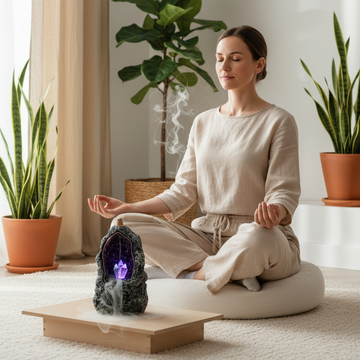
Pair it with a ritual cue: a candle, a quiet object, or subtle incense with ventilation
The cue helps you drop into calm faster.
Common mistakes (and quick fixes)
Mistake: trying to “force calm”
Fix: just practice the exhale and return to breath
Mistake: slouching
Fix: sit upright; posture affects alertness and ease
Mistake: thinking you did it wrong because thoughts appear
Fix: thoughts are normal—returning is the training
When to do this practice
-
before a difficult conversation
-
after reading stressful news
-
midday reset
-
before bed (gentle version)
If you can do this once daily, you’ll build resilience over time.
Internal links (recommended)
-
What Is Mindfulness Meditation? A Simple Explanation for Beginners
-
Best Time of Day to Meditate: Morning vs Night (What Actually Matters)
CTA (choose one)
-
Shop Meditation Essentials → https://zensoullab.com/collections/backflow-incense-burner
FAQ
How fast can meditation reduce stress?
Many people feel calmer within 2–5 minutes, especially with longer exhales.
Is breathing meditation safe for everyone?
Generally yes, but if slow breathing makes you dizzy, breathe naturally and shorten the counts.
Should I close my eyes?
Optional. Eyes open can help if you feel anxious or sleepy.