
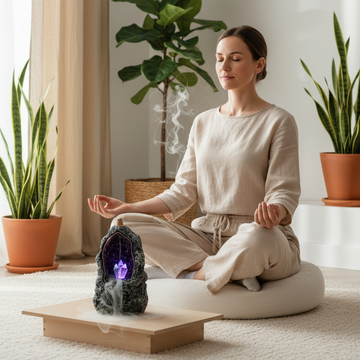

Short answer
Popular incense scents for meditation include sandalwood (calm and grounding), lavender (relaxation and sleep support), frankincense (focus and clarity), and jasmine (soft calm). The best scent is the one that feels pleasant and not overpowering. Start with lighter scents, short burn times, and gentle ventilation.
How to choose an incense scent (the real rule)
Incense is a tool for atmosphere—not a test. The right scent:
-
feels pleasant and not “sharp”
-
doesn’t trigger headaches or irritation
-
supports your intention (calm, focus, sleep)
-
works well in your space with light ventilation
If a scent distracts you, it’s not the right one for meditation—no matter how popular it is.
Best incense scents by intention
Below are common pairings people use for meditation routines:
For calm + grounding
Sandalwood
-
warm, woody, steady
-
great for daily mindfulness
-
often feels “anchoring” and minimal
Cedar / soft woods
-
clean, earthy, stable
-
good for quiet, focused practice
For focus + clarity
Frankincense
-
resinous, bright-warm
-
often used for attention and ritual clarity
Light herbal notes (if available)
-
can feel crisp and clean
-
good for daytime meditation
For sleep + relaxation
Lavender
-
soothing and soft
-
best used lightly with ventilation
-
pairs well with breathwork and body scan
Jasmine
-
gentle floral calm
-
often feels comforting and warm
A simple “scent routine” (so it becomes a habit cue)
Use scent as a ritual trigger:
-
Light incense
-
Sit down immediately
-
3 slow breaths
-
Start meditation
Over time, your brain links the scent to calm. That makes it easier to begin.
How strong should the scent be?
Less is usually better for meditation.
Practical tips:
-
burn for a shorter time (5–10 minutes)
-
ventilate lightly (crack a window)
-
keep burner at a distance
-
avoid very small closed rooms
If the scent dominates your attention, it’s too much.
Choosing scents if you’re sensitive
If you’re prone to headaches or irritation:
-
start with softer woody scents
-
avoid heavy, sharp, or very sweet fragrances
-
keep sessions short
-
consider smoke-free alternatives when needed
Your meditation should feel supportive, not irritating.
Internal links (recommended)
-
How to Meditate with Incense: Setup, Timing, and Safety Tips
-
Meditating with Backflow Incense: How to Create a Calm Ritual
CTA (choose one)
-
Shop Incense Cones → https://zensoullab.com/collections/stick-cone-backflow-incense
-
Explore Incense Burners → https://zensoullab.com/collections/backflow-incense-burner
FAQ
Which scent is best for beginners?
Sandalwood is often a great beginner choice because it’s warm, grounding, and not overly stimulating.
Is lavender good for meditation?
Yes, especially for relaxation and sleep routines—use lightly and ventilate.
Does incense improve meditation results?
It can improve consistency by creating a calming cue, but meditation works without it.