
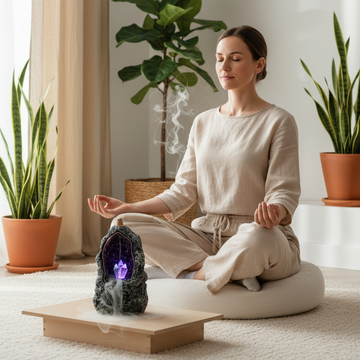
Introduction: When throat tightness during meditation shows up, it’s usually your setup—not your breath
If you’ve ever settled into a mindfulness practice, started to follow your breath, and then—out of nowhere—felt a clench in your throat, you’re not alone. It can feel confusing: you’re doing something meant to reduce stress, yet your body responds like it’s bracing for impact. Sometimes it even comes with a subtle gaggy feeling, a lump-in-the-throat sensation, or the sense that you can’t get a “full” inhale.
Here’s the grounded truth: in many cases, throat tightness during meditation isn’t a sign that your breathing is wrong. It’s a sign that your neck, jaw, and ribcage setup is asking for a kinder alignment. If your head is subtly jutting forward, your chin is locked, or your rib cage can’t move freely, your throat may “help” by tensing—especially when you’re paying close attention to breathing.
In this guide, we’ll make this practical. You’ll learn why the throat tightens, what it has to do with your nervous system and stress response, and exactly how to adjust your meditation posture so breathing feels simple again. We’ll also cover jaw tension meditation patterns, chin tuck sitting posture cues that don’t strain you, and a rib cage breathing approach that supports anxiety relief and better sleep over time.
The Science/Why: How the nervous system, cortisol, and stress response can tighten your throat
Throat tightness often looks like a “breathing problem,” but it’s frequently a stress response problem with a posture component. When you sit down to meditate, you’re not just sitting—you’re signaling safety (or not) to the nervous system.
When your body senses threat or effort, the sympathetic branch of the nervous system (fight/flight) can activate. That can increase muscle tone in protective places—like the jaw, the front of the neck, and the upper chest. This is especially common if you’re already carrying stress, running on higher cortisol, or using a lot of screen-time posture in daily life. Meditation can make these patterns more noticeable because attention gets quieter and internal sensations get louder.
Two key pieces are at play:
- Airway support muscles (around the throat, tongue base, and hyoid region) may tense when the head and neck are not stacked. Forward head posture can ask the front of the neck to “hold you up,” which steals ease from the throat.
- Rib cage mechanics change under stress. Many people default to upper-chest breathing when anxious. That pattern can overwork accessory breathing muscles (neck and shoulders), which feeds a loop of tightness.
So even if you’re doing a guided meditation perfectly, if your ribcage can’t expand and your neck is doing extra labor, your throat may tighten as a compensation. And then your mind interprets that tightness as danger—spiking stress again. The good news: when you adjust the setup, the system often downshifts quickly. That’s one of the quiet mental health benefits of working with the body first.
The How-To (Deep Dive): Fix neck and ribcage setup so breathing stops feeling forced
These methods are designed to be simple and repeatable. You can use them during any mindfulness practice—silent sitting, mantra, or guided meditation. Aim for comfort and neutrality, not “perfect posture.”
1) Re-stack your head: gentle neck posture meditation cue (without over-tucking)
Most throat strain comes from a subtle forward head position or a “military straight” correction that over-tenses the front of the neck. We want a middle path.
- Start with your base: feel your sitting bones (or feet on the floor in a chair). Let your pelvis be heavy.
- Float the back of the head up: imagine a soft lift from the crown, like a thread gently lengthening your spine.
- Micro-nod: instead of forcing a chin tuck sitting posture, try a 5% nod as if saying “yes” very subtly. This helps the back of the neck lengthen without clamping the throat.
- Check the throat: see if the front of the neck can soften. If you feel strain, undo 10% of your correction.
Helpful test: swallow once. If swallowing feels effortful, you’re probably over-tucking or lifting the chest too hard. In a supportive meditation posture, swallowing is easy and neutral.
2) Unhook the jaw: a targeted approach for jaw tension meditation
Jaw and throat are close partners. If your jaw is clenching (even lightly), your throat often tightens to match. Many people don’t realize they’re holding tension until they get still.
- Let the tongue be wide: rest it gently on the floor of the mouth. (If it presses to the roof aggressively, soften.)
- Teeth apart, lips together: allow a small space between upper and lower teeth. This alone can reduce stress in the throat.
- Massage cue: place fingertips on the jaw hinge (just in front of the ears). On an exhale, imagine the hinge melting.
- Sound option: a quiet hum on the exhale (barely audible) can relax the throat without forcing breath.
This is not about “fixing” yourself. It’s about giving your nervous system a clear signal: we’re safe enough to unclench.
3) Free the rib cage: make rib cage breathing your default instead of neck-breathing
If the rib cage is stiff, your body recruits the neck to breathe—hello throat tightness. So we’ll teach your ribs to do their job again.
Try this simple breathwork technique for 6–10 cycles:
- Hands on ribs: place your palms on the sides of your lower ribs.
- Inhale softly: feel the ribs widen sideways (like an umbrella opening). Don’t chase a big breath.
- Exhale longer: let the ribs settle down and in. A slightly longer exhale can calm the stress response and support anxiety relief.
- Keep shoulders quiet: if shoulders lift, reduce breath size by 20%.
This is a posture-driven reset. Over time, it can reduce stress, support better sleep, and make meditation feel less like “breathing work” and more like settling.
4) Choose a seat that makes alignment effortless: comfortable seat first, technique second
Many people strain their throats because they’re fighting gravity. If your hips are lower than your knees on the floor, the spine rounds, the head drifts forward, and the neck compensates. A supportive cushion can change everything about your meditation posture within minutes.
If you sit on the floor, consider a cushion that helps the pelvis tilt slightly forward so the spine stacks naturally. For example, ZenSoulLab’s ergonomic meditation cushion can support a stable base so your neck doesn’t have to “hold” your whole upper body.
- Goal: hips slightly higher than knees.
- Result: less rounding, less forward head posture, more open throat.
- Bonus: easier consistency because sitting stops feeling like a chore.
If you prefer a more structured lift with resilient support, a cushion like the Unity meditation cushion can help you find a comfortable seat that keeps the rib cage buoyant—so breathing happens in the torso instead of the neck.
5) Re-orient attention: use a body scan to soften the throat without micromanaging the breath
Sometimes the tightness persists because attention keeps “grabbing” the throat. The fix isn’t to force relaxation—it’s to widen the field of awareness.
- Start broad: feel both hands, both feet (or both knees), and the weight of the body.
- Then include the throat: notice sensation as temperature, pressure, or movement—no story.
- Soften on exhale: on each exhale, imagine warm space around the front of the neck.
- Return to ribs: anchor attention in rib movement rather than air moving through the throat.
This body scan approach is powerful because it works with the nervous system: it reduces threat-monitoring and supports the downshift that brings mental health benefits over time.
Tool Kit: Cushions, props, and setup cues for a throat-friendly meditation posture
You don’t need a complex setup, but a few props can prevent the exact alignment issues that create throat tightness during meditation.
- Meditation cushion or zafu: lift hips to support a neutral spine. (This is the foundation of a solid zafu posture setup.)
- Folded blanket: under knees or ankles to reduce strain and help the pelvis relax.
- Yoga block: under hands if shoulders round forward; this can prevent neck tension.
- Wall support: sitting with your back lightly against a wall can teach stacking without effort.
- Timer + simple plan: a consistent daily routine reduces decision fatigue, which indirectly helps reduce stress.
One more “prop” that’s underrated: permission to adjust. If your throat tightens, it’s not a failure. It’s feedback. Take one slow breath, change one thing (jaw, ribs, head), and continue.
Common Obstacles (FAQ Style): Common Questions about throat tightness, neck posture, and breathing
Why do I get throat tightness during meditation even when I’m breathing slowly?
Slow breathing can help, but if the rib cage isn’t moving well, slow breathing sometimes becomes effortful. Then the neck and throat muscles “assist,” which increases tightness. Also, when you slow down, you may notice sensations that were already present due to stress, posture, or cortisol-driven tension. Try shifting from “slow breath” to “easy rib movement,” and let the breath be smaller. Often the throat relaxes when the body stops working so hard.
Is a chin tuck sitting posture always the solution for neck posture meditation?
No. A gentle chin tuck can help if your head is forward, but an aggressive tuck often compresses the front of the throat and ramps up jaw tension meditation patterns. Think “micro-nod” rather than “double-chin.” Your best cue is sensation: if the throat feels more open and swallowing is easy, you’re likely in the right range.
Should I stop meditating if throat tightness triggers anxiety or panic?
If throat sensations trigger anxiety, you can absolutely adjust your approach. You don’t have to push through. Try a guided meditation that emphasizes grounding (hands, feet, sounds) rather than breath focus, or do a short body scan lying down. Keep sessions brief (3–7 minutes) and prioritize consistency over intensity. If you have a history of panic, trauma, or medical concerns, consider working with a qualified clinician or meditation teacher for personalized support.
Comparison: Chair vs. cushion, morning vs. night, and breath focus vs. broader mindfulness practice
There’s no single best way—only what helps your nervous system feel safe and supported.
- Chair vs. cushion: A chair can reduce hip strain and make a comfortable seat easier, especially if your legs go numb on the floor. A cushion often improves pelvic tilt and spinal stacking if you prefer floor sitting. If throat tightness during meditation is frequent, choose whichever option lets your ribs move freely without neck effort.
- Morning vs. night: Morning practice can set a calm baseline and reduce stress reactivity through the day. Night practice can support better sleep, especially with longer exhales and a body scan. If your throat tightens more at night, you may be carrying accumulated tension—try gentler breathwork techniques and more jaw release.
- Breath focus vs. broader mindfulness practice: Breath focus is classic, but it’s not mandatory. If the throat becomes a hotspot, shift to sound, touch points, or a guided meditation that anchors in the whole body. Paradoxically, backing off the breath can bring the breath back naturally.
Conclusion: A softer throat often begins with a smarter setup—and a little consistency
Throat tightness during meditation can feel personal, like you’re doing something wrong. But most of the time it’s mechanical and protective: your neck, jaw, and rib cage are trying to help you feel stable. When you give them better support—through a kinder meditation posture, a truly comfortable seat, and rib-led breathing—the throat usually stops working overtime.
Try this for the next week: keep your daily routine small, choose one setup change (hips higher than knees, micro-nod, jaw soft), and use a body scan when attention gets sticky. Consistency beats intensity here. The mental health benefits of practice aren’t just about what happens during the session—they’re about teaching your nervous system, day after day, that ease is possible.
Remember: you’re not here to conquer your breath. You’re here to let the body feel safe enough to breathe on its own.
If you want, I can also write a short 5-minute guided meditation script specifically for throat tightness (with jaw release + rib cage breathing cues) that you can use anytime.