
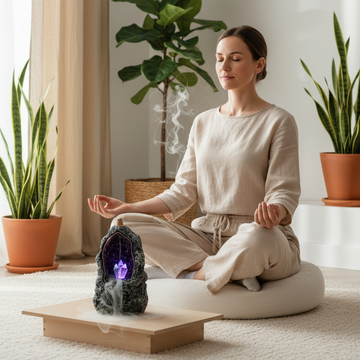
Introduction: The “Micro-Sanctuary” Method for meditation corner ideas that actually gets you to sit
Most people don’t struggle with knowing that meditation is helpful. The real struggle is the moment before you do it: you’re tired, your mind is loud, your phone is right there, and the idea of “sitting down to meditate” feels like one more task.
That’s where the Micro-Sanctuary Method comes in. Instead of relying on willpower, you build a small, inviting meditation corner that gently pulls you in—even when you don’t feel like sitting. Think of it like leaving a guitar on a stand instead of in a case: the environment does some of the motivation for you.
This post will give you practical meditation corner ideas for a small apartment meditation space or a full room, along with a simple home sanctuary setup you can maintain inside a busy life. We’ll keep it grounded: no perfection, no “Pinterest pressure,” just a mindful living space that makes a real mindfulness practice easier to begin—and easier to repeat.
The Science/Why: How a meditation corner supports the nervous system and helps reduce stress
Your brain is a pattern-recognition machine. When you repeatedly do something in the same place, your nervous system starts to associate that space with a specific state. This is one reason a dedicated meditation corner can feel calming faster than trying to meditate anywhere, anytime.
When you’re stressed, your body shifts into a stress response—sympathetic nervous system activation—with stress hormones like cortisol elevated. You may notice a tighter chest, faster thoughts, shallow breathing, and a “must fix everything right now” feeling. A consistent environment cues the opposite: safety, predictability, and the conditions for parasympathetic settling.
In plain language: a micro-sanctuary helps your system remember how to downshift. Over time, this can support:
- Reduce stress by lowering baseline arousal and interrupting rumination loops
- Anxiety relief through steady sensory cues (light, posture, breath) that signal safety
- Better sleep by training your body to transition out of “doing mode”
- Mental health benefits like improved emotional regulation and less reactivity
It’s also a practical behavioral hack: when your meditation corner is ready-to-go, you remove friction. Less friction means more consistency, and consistency is where meditation actually becomes a supportive daily routine rather than an occasional “good idea.”
The How-To (Deep Dive): A home sanctuary setup you can build in 30 minutes (and refine over time)
The Micro-Sanctuary Method has one core principle: design for the moment you’re least motivated. When you feel scattered, tired, or resistant, your setup should make the next right step obvious and easy.
Step 1: Choose a “low-friction” location (especially for a small apartment meditation space)
Your meditation corner doesn’t need a whole room. It needs a predictable spot that’s easy to access and easy to keep lightly protected. Aim for a place you naturally pass by—so the corner can gently remind you, without nagging.
- Edge of a living room: a corner near a window or bookshelf
- Bedroom nook: great if you want better sleep and a calmer wind-down
- Closet-to-calm conversion: a small cleared section with a cushion and soft light
- Behind a screen or curtain: creates “psychological separation” without renovations
Ground rule: your space should feel like an invitation, not a punishment. If the corner is right next to your work desk and that desk stresses you out, you’ll have to work harder to settle.
Step 2: Design for the senses: calming lighting for meditation, sound, and visual simplicity
Many people try to “force calm” mentally. A micro-sanctuary works from the outside in: it uses the senses to reassure your nervous system first, then the mind follows.
Start with calming lighting for meditation. Bright overhead lights can keep your system alert. Softer, warmer light supports ease.
- Warm lamp (2700K-ish): choose a small lamp or salt lamp near floor height
- Single candle: simple, focusing, and naturally slows the gaze
- Indirect light: bounce light off a wall rather than aiming it at your face
Then simplify visuals. One object with meaning is better than ten objects that become clutter. If you like symbolism, choose one: a small plant, a stone, a photo, or a simple piece of art that signals “pause.”
Your corner doesn’t have to look like a spa. It has to feel like a safe exhale.
Step 3: Make posture effortless: meditation posture, comfortable seat, and smart zafu and zabuton placement
Here’s a quiet truth: a lot of people “can’t meditate” because they’re uncomfortable. Physical discomfort becomes mental agitation, and then you think the problem is your mind—when it’s actually your setup.
Your goal is a comfortable seat that supports a stable meditation posture: pelvis slightly elevated, spine long (not rigid), shoulders relaxed, hands resting easily. That posture helps keep breathing open, which makes both breathwork techniques and stillness more accessible.
If you’re using a floor setup, think in terms of zafu and zabuton placement (or any cushion + mat combo):
- Mat/blanket first (zabuton equivalent): protects knees/ankles and defines the “container”
- Cushion centered (zafu equivalent): sit toward the front edge so the hips elevate
- Knees supported: if knees float, add folded blankets under them
For ergonomic support, a dedicated cushion can make the difference between “I should meditate” and “I can actually sit.” If you like a stable, grounded lift under the hips, consider a supportive design like the ergonomic meditation cushion to help your pelvis tilt naturally and reduce strain in the low back.
If you prefer a more plush-yet-supportive feel (especially if you tend to fidget or collapse), a resilient cushion can help you stay upright without gripping. Something like the supportive meditation cushion can create a steadier base so you’re not negotiating discomfort for the first five minutes of every sit.
Remember: posture isn’t about looking “perfect.” It’s about feeling steady enough that your attention can soften.
Step 4: Create a “start ritual” that leads into mindfulness practice (even on low-energy days)
Motivation is unreliable. Ritual is dependable. Your start ritual should take under 60 seconds and clearly mark the transition from life to practice.
- Sit down and place both feet (or knees) firmly
- Take one slow inhale through the nose, longer exhale through the mouth
- Turn on your lamp/candle (same cue every time)
- Set a timer for 5–10 minutes
That’s it. The point is not to “get it right.” The point is to begin. Over time, the ritual itself becomes a conditioned cue that helps your nervous system settle faster—supporting anxiety relief and helping reduce stress without you needing to wrestle your mind.
Step 5: Use a simple practice menu: guided meditation, breathwork techniques, and body scan
When you sit down, decision fatigue can kick in: “What should I do?” A practice menu prevents that. Choose one primary option and keep it consistent for a few weeks.
- Guided meditation (great for busy minds): follow a familiar voice and structure
- Breathwork techniques (great for stress response): try slow exhale emphasis (e.g., inhale 4, exhale 6)
- Body scan (great for better sleep): move attention from head to toe, softening tension
If you’re building a nightly routine for better sleep, the body scan is especially friendly. If you’re trying to reset midday, gentle breathwork techniques can quickly shift the nervous system out of high alert. If your thoughts are relentless, guided meditation reduces the burden of “doing it alone.”
Tool Kit: Props, cushions, and small comforts that make a mindful living space sustainable
You don’t need much. But the right few items remove friction and help your micro-sanctuary stay welcoming. Think “simple and repeatable.”
- Cushions/props: a meditation cushion, folded blankets, or a small bolster for knees/hips
- Support under legs: blocks or firm pillows if your hips are tight
- Soft ground layer: a zabuton-style mat, rug, or thick blanket to define the corner
- Timer: phone timer is fine; airplane mode helps if notifications derail you
- Warm light: a small lamp or candle for calming lighting for meditation
- Optional sensory anchors: light scent (if not sensitizing), a small plant, a shawl
Pro tip for consistency: keep everything in place. If you have to “set up” each time, your brain treats meditation like a project. If it’s already there, it feels like a doorway you can walk through.
Common Obstacles (FAQ Style): Common Questions about creating a meditation corner at home
What if I don’t have space for a meditation corner?
You do not need a spare room. A micro-sanctuary can be as small as a single cushion and a lamp beside it. For a small apartment meditation space, the key is clear boundaries rather than square footage.
- Use a folded blanket as a “base” you can lay down and pick up easily
- Store your cushion in plain sight (not hidden in a closet)
- Create a visual boundary with a plant, low shelf, or screen
If it’s visible, it calls you. If it’s hidden, it becomes optional.
What if I sit down and my mind gets even louder?
This is extremely common. When you stop moving, you start hearing yourself. That doesn’t mean meditation is failing; it means you’re noticing what was already there.
Try shifting from “silent sitting” to a more structured mindfulness practice:
- Choose a guided meditation for 7–10 minutes
- Use breathwork techniques with longer exhales to calm the stress response
- Do a body scan to give attention a job that isn’t thinking
Over time, your nervous system learns that the corner is not a place where you “solve your thoughts,” but a place where you can let them pass without chasing them.
What if my body hurts in meditation posture?
Discomfort is feedback, not a character flaw. Your meditation posture should be stable and kind. If your hips are tight or your knees are sensitive, forcing the floor can backfire.
- Elevate hips higher so knees can drop (use cushions/props)
- Support knees with folded blankets so the legs feel held
- Try a chair option (more on that below)
When your body feels supported, your attention stops bracing. That’s when the mental health benefits become more accessible—because you’re not spending the session negotiating pain.
Comparison: Chair vs. Cushion, Morning vs. Night—choose what supports consistency
There isn’t one “right” way to set up your corner. There is only what helps you return.
- Chair vs. Cushion: A chair is excellent if you have knee/hip issues or low back sensitivity. A cushion can feel more ritualized and grounded, and may encourage a longer spine. Either can be a comfortable seat if your feet (chair) or knees (floor) feel supported.
- Morning vs. Night: Morning practice tends to protect your attention before the day ramps up—often helping reduce stress proactively. Night practice supports better sleep by easing the nervous system out of stimulation. If you can only choose one, choose the time you’ll realistically keep as a daily routine.
- Silent vs. Guided: Silent sitting builds tolerance for stillness. Guided meditation builds steadiness and reduces decision fatigue. Many people do best starting guided, then adding a few quiet minutes at the end.
If you’re stuck, choose the option that requires the least willpower. That’s not “taking the easy way out”—that’s designing for consistency.
Conclusion: Your micro-sanctuary is a doorway—step through it, gently, again and again
A meditation corner isn’t about aesthetics. It’s about relationship. It’s a small promise you make to your nervous system: “There is a place where we don’t have to perform.”
Start small. One corner. One cushion. One warm light. One practice menu. Let your micro-sanctuary become the easiest place in your home to pause, breathe, and come back to yourself.
And on the days you don’t feel like sitting—those are often the days your system needs it most. Not as another task, but as a refuge. A few minutes of mindfulness practice, supported by a thoughtful setup, can be enough to reduce stress, support anxiety relief, and gradually create the conditions for better sleep and deeper mental health benefits.
Keep it simple. Keep it kind. Build the corner that pulls you in.