
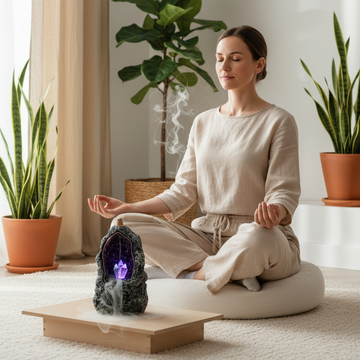
Introduction: A 10-minute meditation corner setup that breaks the doom-scroll loop
You pick up your phone for “one quick check,” and suddenly 27 minutes are gone. Your shoulders are up, your jaw is tight, and your mind feels like it’s running a dozen tabs at once. Doom-scrolling can be sneaky like that—especially when life is already demanding. If you’ve been wanting a mindfulness practice but can’t seem to start (or stick with it), you don’t need a perfect home, a silent retreat, or an hour of free time.
You need a meditation corner setup that makes the healthy choice feel like the easy choice. Think of it as a tiny “reset corner” that interrupts the scroll, softens the stress response, and reminds your nervous system what calm feels like.
This post will help you create a 10-minute “Doom-Scroll Reset” corner—using home sanctuary ideas that work in a studio apartment, shared house, or busy family home. We’ll cover a simple setup, a phone-free ritual, and a repeatable routine that supports anxiety relief, better sleep, and real mental health benefits over time—without turning your life into a complicated self-improvement project.
The science behind a calming space at home: nervous system, cortisol, and the stress response
Doom-scrolling isn’t just “bad habits.” It’s often your body looking for certainty or control when it feels overwhelmed. When you take in alarming headlines, conflict, or endless comparison, your brain can interpret it as threat—especially if you’re already tired.
Here’s what can happen internally:
- Stress response activation: Your sympathetic nervous system ramps up, preparing you to fight, flee, or freeze—even though you’re sitting on a couch.
- Cortisol and alertness: Stress hormones like cortisol can rise, making it harder to relax, harder to focus, and harder to transition into rest.
- Attention fragmentation: Rapid, novelty-based content trains your mind to scan and react rather than settle and digest.
A well-designed calming space at home does something powerful: it changes your context. Context is a cue for your nervous system. When your body repeatedly experiences a certain corner as safe, quiet, and predictable, it learns to downshift faster. This is not about being “zen” 24/7. It’s about practicing the skill of returning.
Even a short guided meditation, a few breathwork techniques, or a gentle body scan can stimulate the parasympathetic nervous system (your “rest and digest” mode). Over time, this supports your ability to reduce stress in everyday moments—not just during meditation.
And yes, this can affect sleep. When your system is less revved up at night, it’s easier to unwind, stop ruminating, and ease into better sleep. You’re not forcing rest; you’re creating conditions for it.
The How-To deep dive: meditation corner setup steps for a 10-minute Doom-Scroll Reset
The goal is not aesthetic perfection. The goal is consistency—a corner that feels inviting enough to use on a regular Tuesday when you’re not motivated.
Step 1: Choose a “low-friction” corner (not the perfect corner)
Pick a spot you already pass by: beside your bed, near the window, next to the couch, or in the quietest part of the room. The best meditation corner setup is the one you’ll actually use.
- Make it visible: Out of sight often means out of routine.
- Make it accessible: If you have to move furniture every time, you’ll skip it when you’re tired.
- Make it “yours”: Even a tiny signal—like a folded blanket—tells your brain “reset happens here.”
If you’re in a shared space, think “micro sanctuary.” A small mat, a basket of props, and one meaningful object can be enough. These are practical, realistic home sanctuary ideas—not a Pinterest fantasy.
Step 2: Build a comfortable seat and supportive meditation posture
Most people quit because they’re uncomfortable, not because they’re “bad at mindfulness.” The body matters. A stable meditation posture communicates safety and steadiness to the nervous system.
A few grounded principles:
- Hips slightly higher than knees helps your spine stack naturally.
- Support your knees (blankets or pillows) if they float or strain.
- Relax the effort: upright, not rigid—like a mountain with soft shoulders.
If you want a dedicated cushion that encourages a comfortable seat and less fidgeting, consider a supportive option like the ergonomic meditation cushion. Buckwheat hull filling can offer steady, moldable support so you can focus on your breath instead of your hips.
Prefer something that feels resilient and structured (especially if you’re building a daily routine and want the seat to “hold” you consistently)? The resilient support meditation cushion can help create a reliable foundation for posture without constant readjusting.
Either way, remember: the point is not to look like a meditator; it’s to feel stable enough to stay.
Step 3: Create a phone-free ritual (the doom-scroll reset switch)
This is the heart of the practice: a small, repeatable action that breaks the trance of mindful media consumption turning into automatic media consumption.
Try this simple phone-free ritual:
- Place your phone outside the corner (across the room, face down, or in a drawer). If that feels intense, start with 10 minutes on Do Not Disturb.
- Touch one object that signals “I’m here” (a stone, beads, a folded cloth).
- Set a 10-minute timer (a small kitchen timer is ideal so you’re not tempted to open your phone).
You’re not fighting technology; you’re creating boundaries. This is mindful media consumption in action: choosing when media supports you and when it drains you.
Step 4: Use a 10-minute guided meditation sequence (breathwork + body scan)
When you’re anxious or overstimulated, “just sit and clear your mind” is rarely helpful. Structure helps. Here’s a simple sequence you can repeat daily—especially when you want to reduce stress quickly and gently.
Minute 0–2: Arrive with breathwork techniques
Sit down. Feel your hands resting. Inhale through the nose for a smooth count of 4. Exhale for a smooth count of 6. Repeat. Longer exhale cues the body to soften the stress response.
Minute 2–6: Body scan for anxious energy
Do a slow body scan: forehead, jaw, throat, shoulders, chest, belly, hips, legs, feet. You’re not forcing relaxation—just noticing. If you find tension, exhale and let it be 5% softer.
Minute 6–9: Simple mindfulness practice (one anchor)
Pick one anchor: breath at the nostrils, belly movement, or sound. When thoughts pull you away (they will), you return without drama. This is the rep that builds the skill.
Minute 9–10: Close the loop
Place a hand on your chest or belly. Acknowledge: “I reset.” Then stand up slowly. This teaches your nervous system that calm can be accessed and carried into the next moment.
If you prefer, you can rotate anchors: some days a guided meditation audio, other days silent breath, other days a body scan. The key is keeping it doable so your daily routine doesn’t collapse under pressure.
Step 5: Make it repeatable: design for consistency, not intensity
Ten minutes done often beats 45 minutes done once a month. If you want the corner to “make you want to practice,” you’re designing for the real you—the tired you, the busy you, the you who sometimes spirals at night.
- Leave the corner set up as much as possible—cushion, blanket, timer, and a small prop basket.
- Pair it with an existing habit: after brushing teeth, after lunch, or right after you plug in your phone.
- Track consistency lightly: a simple checkmark on a calendar helps your brain value repetition.
This is where the real mental health benefits show up: not from a single perfect session, but from returning again and again—especially on the days you’d rather scroll.
Tool kit for a calming space at home: cushions, props, and a simple zafu and zabuton setup
You don’t need a full meditation room, but a few well-chosen items can make your corner feel supportive and inviting. Think of props as accessibility tools: they reduce pain, reduce fidgeting, and help you settle.
Here’s a grounded toolkit (use what you already have first):
- Cushions: A meditation cushion or firm pillow to elevate hips and support posture.
- Blanket: For warmth (warmth signals safety) and to pad ankles or knees.
- Yoga blocks or folded towels: For knee support or to modify hip angle.
- Eye pillow or scarf: Helpful when your nervous system is overstimulated and you want to downshift.
- Timer: Ideally not on your phone, to keep the ritual truly phone-free.
If you’re curious about a classic zafu and zabuton setup, it’s simply a cushion (zafu) on top of a larger mat (zabuton). The mat cushions ankles and knees; the seat supports hips and spine. You can replicate this with a firm pillow plus a folded quilt if you’re not ready to buy anything.
Add one or two “signals” that this is your sanctuary: a small plant, a candle (only if safe), or a meaningful object. Minimal is fine. Your corner’s job is to say: “You can put it down now.”
Common obstacles (FAQ style): common questions about mindfulness practice and sticking to it
“I can’t stop thinking—does that mean meditation isn’t working?”
No. Thinking is not failure; it’s the mind doing what minds do. The practice is noticing you’ve been pulled away and returning. That returning is the workout. Over time, this strengthens attention and emotional regulation, which supports anxiety relief and helps you reduce stress in real life.
If your mind is loud, use more structure: a short guided meditation, counted breathing, or a body scan. Your nervous system may simply need a clearer pathway into rest.
“My body hurts when I sit—what meditation posture should I use?”
Start with comfort and stability. A sustainable meditation posture is one you can hold without strain. If cross-legged hurts your hips or knees, sit on a chair with feet flat and a tall spine. If your back tires quickly, elevate your hips higher or support your knees.
A comfortable seat matters more than tradition. Pain triggers more stress response; comfort supports settling. The corner is meant to feel like relief, not a test of toughness.
“What if I only do this at night—will it help with better sleep?”
Yes, many people find a 10-minute reset in the evening supports better sleep, especially if doom-scrolling is part of their bedtime pattern. The key is keeping it gentle: slower breathwork, longer exhale, and a calming body scan.
If you’re using the corner at night, dim lighting helps. Also consider making the phone-free ritual non-negotiable for those 10 minutes—your brain needs a clean break from stimulation to transition toward rest.
Comparison: chair vs. cushion, morning vs. night, and what to choose for consistency
There isn’t one “best” option—there’s the option you’ll repeat. Here’s a practical comparison to help you choose based on your body and schedule.
- Chair vs. cushion: A chair is great if you have knee/hip pain or feel unstable on the floor. A cushion can encourage a grounded, dedicated ritual and can make the corner feel more intentional. Both can support a real mindfulness practice when your posture is stable and your breath is free.
- Morning vs. night: Morning practice can set a calmer baseline and reduce reactivity during the day. Night practice can downshift cortisol and support better sleep. If you can’t decide, pick the time you’re most likely to protect—consistency beats ideal timing.
- Silent vs. guided: Silent practice is simple and flexible, but guided meditation can be especially helpful when you’re anxious, distracted, or new. Alternating both keeps your daily routine fresh without increasing complexity.
If your main challenge is doom-scrolling, choose the option that most reliably interrupts it. Sometimes that means a chair beside your bed and a timer you can’t scroll on. Sometimes it means a cushion that feels so good you actually want to sit.
Conclusion: your 10-minute reset corner is a small act of self-respect
It’s easy to treat doom-scrolling like a moral failure. It’s usually not. It’s often a stressed nervous system trying to manage uncertainty the only way it knows how—more information, more checking, more stimulation.
A thoughtful meditation corner setup gives you another option: a place to pause, breathe, and return to your body. Ten minutes of breathwork techniques, a body scan, or guided meditation won’t erase your problems—but it can change how you meet them. It can soften the stress response, support anxiety relief, and gradually build the mental health benefits that come from showing up for yourself in a steady way.
Keep it simple. Make it comfortable. Make it phone-free for just long enough to remember: you don’t have to live inside the scroll.
Your practice doesn’t have to be big to be real. It just has to be repeated.
If you try this for a week, pay attention to one thing: not whether you’re “good at it,” but whether you feel even 5% more settled afterward. That’s the trailhead. That’s your corner doing its job.