
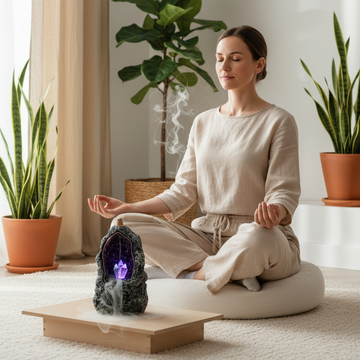
Why legs falling asleep during meditation happens (and why it’s not a personal failure)
If you’ve ever settled into a mindfulness practice, started to feel calm… and then suddenly noticed pins and needles while meditating, you’re not alone. That creeping numbness can feel distracting, confusing, and honestly a little discouraging—especially if you’re trying to build a daily routine with some real consistency.
The good news: legs falling asleep during meditation is usually a simple mechanics-and-circulation issue, not a sign you’re “bad at meditation.” In most cases, you can fix it in about five minutes by changing how your weight is distributed, how your hips are supported, and how your knees meet the ground.
This post will explain why meditation numbness happens, what your nervous system is doing when you sit still, and how to use simple support (including the right cushion height and knee support) to create a comfortable seat that lets you focus on guided meditation, breathwork techniques, or a body scan—instead of counting down the seconds until you can move again.
The science: nervous system, circulation, and the stress response behind meditation numbness
Let’s keep it grounded. When you sit cross-legged (or in any position) for a while, a few things can contribute to cross-legged sitting pain, tingling, or numbness:
- Compression of nerves: Certain sitting angles compress nerves around the hips, knees, or ankles. The “pins and needles” sensation is often your nervous system signaling that a nerve is being irritated or temporarily compressed.
- Restricted blood flow: Sitting on soft tissue or folding your legs tightly can reduce circulation. When blood flow returns, you feel tingling.
- Static load on joints and fascia: Staying still places steady pressure on the same tissues. If your hips are tight, your body compensates by dumping more weight into the knees, ankles, or outer thighs.
Now layer in the stress angle. When you’re new to meditation—or you’re going through a busy season—your body may arrive on the cushion already running a mild stress response. That means higher baseline muscle tension, faster breathing, and elevated cortisol. Even if you’re practicing to reduce stress and find anxiety relief, your nervous system can be a little protective at first.
Here’s the paradox: as you begin to relax, you might notice sensation more clearly. Meditation doesn’t always create discomfort; sometimes it simply reveals what was already happening under the surface. This is especially true in a body scan where attention is systematically placed on the legs, feet, and hips.
The aim isn’t to “push through.” A sustainable mindfulness practice supports your body so your nervous system can downshift. When posture is stable and circulation is free, it’s easier for the body to move from activation into the parasympathetic state associated with better sleep, emotional regulation, and long-term mental health benefits.
The 5-minute fix: how to stop legs falling asleep during meditation (deep dive)
Below are practical steps you can do today. You don’t need to become flexible overnight. You need better leverage, smarter angles, and kinder support.
Step 1: Raise your hips to improve meditation posture and circulation
If your hips are lower than your knees, your pelvis tends to roll back, your spine collapses, and your legs often carry extra pressure in awkward places. This is a common reason for meditation numbness.
A simple rule of thumb: hips slightly higher than knees reduces strain and helps your legs rest instead of clench.
- If your knees float up, you likely need more height under the hips.
- If your low back rounds, you likely need more height or a different seat shape.
- If your ankles get compressed, you may need to change leg position (or use a chair).
Many people underestimate how much zafu height matters. Even an extra inch can change the hip angle enough to relieve pressure on nerves and blood vessels. Consider a supportive cushion designed to stabilize the pelvis without forcing the knees.
For example, a structured cushion can help you find a neutral pelvis and a steadier meditation posture without “gripping” through the hips. If you want a cushion that supports a more ergonomic seat shape, consider the ergonomic meditation cushion as a posture-focused option for distributing weight more intelligently.
Step 2: Add knee support (zabuton knee support) to stop pressure points
One of the most overlooked pieces of the puzzle is what’s happening under your knees and shins. When the knees hover or press unevenly into the floor, you get tension up the chain—hips tighten, circulation gets restricted, and then come the pins and needles.
Zabuton knee support (or any firm, flat padding under the legs) gives your knees a soft landing and helps them feel “held.” This reduces the instinct to brace.
- Place a folded blanket or mat under your knees and shins, not just under your hips.
- If one knee is higher, support that side with an extra fold.
- Avoid super-squishy padding that collapses; you want stable cushioning.
Think of it like this: your hips sit, your knees rest, and the floor stops being a hard edge your body has to fight.
Step 3: Choose a leg position that matches your current flexibility (not your ideal)
Sometimes the numbness is simply your body saying, “This shape is too intense right now.” You can still meditate deeply without full lotus or extreme hip rotation.
Try these options, in order of generally increasing intensity:
- Easy seat: legs loosely crossed, shins forward (less stacked).
- Burmese-style: both feet in front of the opposite shin, not on top of each other.
- Seiza (kneeling): hips supported between the heels (often great for people who get ankle numbness when cross-legged).
- Chair: feet flat, knees at about 90 degrees (a valid, powerful meditation posture).
If you consistently experience cross-legged sitting pain, make it simple: reduce the twist in the hips and stop stacking the ankles tightly. A comfortable seat is not a luxury; it’s the foundation for consistency.
Step 4: Use a 60-second circulation reset mid-session (without breaking your practice)
If numbness shows up anyway, you don’t have to “fail the sit” by forcing it. Use a small reset that keeps your nervous system calm and your attention steady.
- Micro-shift: lean slightly forward, then return to center to redistribute weight.
- Toe wiggle: gently move toes inside stillness—tiny motion can restore flow.
- Uncross and recross: slowly change which shin is in front, staying mindful.
This is still meditation. It’s mindful movement inside stillness—an approach that supports anxiety relief because it trains you to respond rather than react.
Step 5: Pair posture support with breathwork techniques to reduce stress in the body
Even with perfect props, a tense nervous system can amplify discomfort. A simple breath pattern can downshift your stress response and reduce protective muscle bracing around the hips and thighs.
- Lengthen the exhale: inhale 4, exhale 6 for 2–3 minutes.
- Soft belly breathing: allow the abdomen to expand on the inhale.
- Release on the exhale: mentally cue “soften hips, soften knees.”
These breathwork techniques aren’t about forcing relaxation; they’re about giving your nervous system a clear signal that you’re safe. Over time, that improves comfort, deepens your mindfulness practice, and can support better sleep when used in an evening daily routine.
Tool kit for a comfortable seat: cushions, props, and setup that actually works
You don’t need a complicated setup, but you do need the right kind of support in the right places. Here’s a simple, reliable toolkit:
- Meditation cushion to raise hips and support neutral pelvis (this is where zafu height matters).
- Zabuton or folded blanket for zabuton knee support (padding under knees/shins).
- Yoga blocks to support knees if they hover or to support hands/forearms if shoulders tense.
- Small folded towel under ankles if ankle pressure triggers pins and needles while meditating.
- Chair (yes, a prop) if your body needs it today—feet flat, spine tall, hands resting.
If you want a cushion option that emphasizes resilient support for longer sits, you might explore the Unity meditation cushion as a way to create a stable base without feeling like you’re sinking or straining to hold posture.
One more practical note: props are not “training wheels.” They’re intelligent ergonomics. The goal is to build a setup that allows your attention to settle—so your guided meditation or silent sitting can actually do its job.
Common Questions (FAQ): meditation numbness, pins and needles, and what to do about it
Is pins and needles while meditating dangerous?
Most of the time, it’s a temporary circulation or nerve-compression signal—uncomfortable, but not dangerous. That said, use common sense: if you feel sharp pain, persistent numbness that doesn’t resolve after moving, or symptoms that show up outside of meditation, it’s wise to consult a healthcare professional.
In typical cases, the fix is mechanical: adjust meditation posture, increase hip height, add zabuton knee support, and reduce ankle compression. You’re aiming for a position where your body can relax into stillness without cutting off flow.
Should I push through legs falling asleep during meditation to build discipline?
Discipline in meditation is not the same as enduring unnecessary pain. If you “push through,” your nervous system often shifts into a guarded state—more tension, more stress response, more cortisol. That’s the opposite of what most people want when they’re practicing to reduce stress and support mental health benefits.
A more sustainable approach: treat numbness as feedback. Make a small adjustment with full awareness. That is discipline—just a kinder version.
Why does cross-legged sitting pain happen even when I’m using a cushion?
Usually one of three things is happening:
- The cushion is too low (insufficient zafu height), so the pelvis rolls back and pressure increases in the legs.
- The knees aren’t supported, so your hips and thighs brace to hold you up.
- The leg position is too intense for your current hip mobility, causing torque at the knee or compression near the ankle.
Try raising the seat height, placing padding under the knees, and choosing a less stacked leg position. If needed, switch to a chair for a few weeks while you build comfort and consistency in your daily routine. Many experienced meditators rotate postures—because bodies change day to day.
Comparison: chair vs. cushion, and morning vs. night for better sleep and anxiety relief
There isn’t one “correct” way—there’s the way that keeps you present.
- Chair vs. Cushion: A chair often wins for circulation and knee comfort, especially if you’re dealing with meditation numbness or ankle compression. A cushion can feel more traditional and grounding, and it can be excellent when the hips are properly elevated and knees are supported. Choose the option that gives you a stable spine and a comfortable seat.
- Morning vs. Night: Morning practice can set your nervous system tone for the day and help reduce stress reactivity. Night practice can support decompression, anxiety relief, and better sleep—especially when paired with gentle breathwork techniques and a short body scan.
If your main struggle is legs falling asleep during meditation, consider a chair at night (when the body is already tired and more prone to slumping) and a cushion setup in the morning when posture is easier to maintain. The best plan is the one you’ll repeat with consistency.
Conclusion: a grounded way forward (comfort first, then depth)
If your legs fall asleep when you meditate, it doesn’t mean you’re doing it wrong. It usually means your body is asking for better angles, better support, and a setup that respects your current flexibility. In other words: this is solvable.
Start with the 5-minute fix: raise your hips, support your knees, choose a kinder leg position, and use tiny mid-session adjustments when needed. Pair that with calming breathwork techniques so your nervous system can settle out of the stress response. Over time, you’ll likely notice not only less numbness, but more steadiness in attention—and the kind of practice that actually delivers the mental health benefits people talk about.
Your meditation doesn’t get “better” by ignoring your body. It gets better when your body feels safe enough to be still.
Keep it simple. Build a daily routine you can repeat. Let comfort support consistency. And if you want extra help staying on track, using a guided meditation a few times a week can keep the mind from turning every sensation into a problem to solve.