
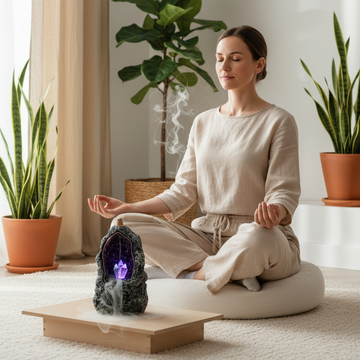

Introduction: Create a home meditation corner you’ll actually return to (in 10 minutes)
Most people don’t need more willpower to meditate. They need a space that makes it easy to begin. If you’ve ever tried to start a mindfulness practice at home—only to end up scrolling, doing dishes, or deciding you’ll “do it later”—you’re not alone. The problem usually isn’t motivation. It’s friction.
The good news: you don’t need a remodel, a spare room, or a perfect aesthetic. You can build a home meditation corner in a small apartment sanctuary, a bedroom edge, or a quiet slice of your living room—something that signals “this is where I reset.” Think of it less like decor and more like a tiny nervous-system-friendly ritual space.
This is the 10-minute “Sanctuary Reset”: a simple, repeatable way to turn any corner into a mindful home setup you’ll actually use. You’ll get practical meditation space ideas, a clear ritual routine, and a posture-focused meditation cushion setup so you can sit down with a comfortable seat and start—even on busy days.
The Science/Why: How a mindful home setup helps reduce stress and support better sleep
When life feels loud, your body doesn’t just “feel stressed”—it runs a stress response. Your nervous system shifts toward fight-or-flight, cortisol levels can rise, and the mind starts scanning for problems. This is helpful if you’re avoiding a car accident. It’s not so helpful when you’re trying to answer emails, parent, or fall asleep.
A consistent ritual space works because your brain learns through association. When you repeatedly sit in the same corner, in the same posture, with the same few cues (a candle, a cushion, a soft light), your system starts recognizing: “We do calm here.” Over time, that recognition can make it easier to reduce stress, find anxiety relief, and transition toward rest. This is one reason people report meaningful mental health benefits from a regular mindfulness practice—not because the space is magical, but because it supports repetition.
There’s also a practical attention angle. A dedicated corner reduces decision fatigue: no searching for a spot, no rearranging furniture, no negotiating with yourself. The less friction at the start, the more likely you are to keep a daily routine and build consistency.
And about sleep: a short evening practice in the same corner can become a “downshift cue.” Gentle breathwork techniques and a simple body scan help signal safety to the nervous system, making it easier to release mental loops and support better sleep.
- Association: same place + same cues = faster settling
- Reduced friction: fewer steps means higher follow-through
- Nervous system support: breath + posture can soften the stress response
- Attention training: a predictable environment reduces distractions
The How-To (Deep Dive): The 10-minute Sanctuary Reset for a home meditation corner
You’re going to build this in a way that works for real life. Not for a photoshoot. Aim for “good enough to use today.” You can always refine later.
Step 1: Choose the smallest possible “yes space” (30–60 seconds)
Your home meditation corner can be tiny. A corner by the bed. The side of the couch. The end of a hallway. The goal is not spaciousness—it’s repeatability.
Pick a spot with one main advantage:
- Low traffic: fewer walk-bys means fewer interruptions
- Visual calm: facing a wall or window can reduce stimulation
- Proximity: near where you already are (bedroom or desk) supports consistency
If you live in a small apartment sanctuary setup, choose a corner you can “claim” with a single object (a cushion or folded blanket). That’s enough to establish identity.
Step 2: Clear a one-arm “landing zone” (2 minutes)
This is the part that makes it doable. You’re not cleaning the room; you’re clearing a landing pad for your attention.
Stand in your chosen spot and clear only what fits within one arm’s reach. Move clutter to a temporary basket or a different surface. Your goal is to remove immediate visual noise that pulls the mind into tasks.
Why this matters: clutter is often interpreted by the brain as “unfinished business,” which can keep the stress response subtly activated. A small clear zone can create a surprising amount of relief.
Step 3: Build a simple meditation cushion setup and posture cue (3 minutes)
Posture isn’t about looking “zen.” It’s about helping your body feel stable so your mind can settle. A supportive meditation posture reduces fidgeting, strain, and the urge to quit early. The biggest upgrade for most people is a comfortable seat that tilts the pelvis slightly forward and supports the hips.
If you sit on the floor, consider a dedicated cushion that makes your home meditation corner instantly ready. For example, a supportive option like the ergonomic meditation cushion can help your knees drop below your hips, encouraging a steadier spine and less lower-back effort.
If floor sitting isn’t comfortable, don’t force it. A chair works beautifully (we’ll compare in a later section). The key is: choose one default setup and stick with it so your body learns the cue.
- Hips supported: reduces low-back compression
- Stable base: less shifting = easier focus
- Repeatable setup: makes practice automatic
Step 4: Add one “ritual anchor” object (2 minutes)
Ritual is what makes a corner feel like a sanctuary. Choose one object that signals, “I’m practicing now.” Keep it minimal so it doesn’t become another project.
Examples that work well:
- A small candle (or battery candle if you prefer)
- A smooth stone or mala beads
- A tiny plant
- A folded cloth that only lives in this corner
When you place this object down before you begin, you’re creating a start line. That simple action becomes your ritual routine: set the anchor → sit → breathe. Over time, the nervous system recognizes the sequence and softens more quickly.
Step 5: Install a 10-minute guided meditation “default” (2 minutes)
Here’s the most practical part: remove the need to decide what to do. Choose a single 10-minute guided meditation you like and make it your default for two weeks. Same track, same length, same time window if possible. This is how you build consistency.
If you prefer unguided practice, use a simple structure:
- Minute 1: arrive (notice contact points, soften the jaw)
- Minutes 2–6: breathwork techniques (easy nasal breathing, slow exhale)
- Minutes 7–9: short body scan (forehead, shoulders, belly, hands)
- Minute 10: close (name one feeling: “calm,” “tired,” “here”)
This blend is powerful for anxiety relief because it trains attention gently while giving the body a clear downshift signal.
Grounded friend reminder: If you only do two minutes, that still counts. The win is showing up to your corner.
Tool Kit: Cushions, props, and small meditation space ideas that support a comfortable seat
A sanctuary doesn’t need much, but a few well-chosen props can make your mindfulness practice feel more supportive and less like a test of endurance. Think “comfort + consistency.”
Core items for a meditation cushion setup:
- Meditation cushion: for stable hips and a reliable ritual cue
- Folded blanket: under knees or ankles for pressure relief
- Small timer or saved track: removes clock-checking
- Light layer (shawl/hoodie): warmth helps the nervous system settle
- Eye pillow (optional): reduces visual stimulation and supports better sleep
If you want a second cushion style that’s supportive and simple, the supportive meditation cushion can be a steady base for cross-legged sitting or kneeling—especially if your goal is to reduce strain so you can stay present longer.
Small apartment sanctuary tip: store everything in a single basket beside your corner. When your props live together, setup takes seconds, and your daily routine becomes more realistic.
Common Obstacles (FAQ Style): Common Questions about building a home meditation corner
What if I don’t have space for a dedicated meditation area?
You don’t need a full room. You need a repeatable micro-space. A home meditation corner can be as small as “where the cushion goes.” If your living space changes (roommates, kids, shared spaces), make it portable:
- Use a cushion + small cloth that you lay down each time
- Keep a basket that slides under a bed or beside a couch
- Face a wall or window to create a sense of boundary
In a small apartment sanctuary, portability is your superpower. The point is the cue, not the square footage.
My mind races when I sit down—how do I get anxiety relief without forcing calm?
A racing mind isn’t failure; it’s information. Often it means your nervous system is still activated. Start with the body first. Use breathwork techniques that emphasize the exhale (for example, inhale gently for 4, exhale for 6). Longer exhales can help shift the stress response.
Then try a short body scan that’s more “checking in” than “relaxing on command.” Move attention through the forehead, jaw, shoulders, chest, belly, hands, and feet. When you find tension, label it softly—“tight,” “buzzing,” “restless”—and allow it to be there. This approach supports mindfulness practice because it builds tolerance and steadiness, not suppression.
If you prefer structure, a guided meditation can help by giving your attention a steady rail to hold onto, especially on high-stress days.
How do I stay consistent when my schedule is unpredictable?
Consistency isn’t about a perfect time—it’s about a dependable trigger. Tie your ritual routine to something that already happens:
- After brushing your teeth
- After making coffee or tea
- When you shut down your laptop
- Right before getting into bed (especially for better sleep)
Keep the bar low: 10 minutes is ideal, but even 3 minutes maintains the identity of “I do this.” That identity is what strengthens a daily routine over time. If you miss a day, your next best move is simply returning to the corner the next day—no punishment, no restarting from zero.
Comparison: Chair vs. cushion, morning vs. night for a mindful home setup
There’s no single best approach—only what you’ll use. Here’s a grounded comparison to help you choose without overthinking.
- Chair vs. Cushion: A chair is excellent if your hips, knees, or ankles are sensitive. Keep feet flat, sit toward the front edge, and lengthen the spine. A cushion can offer a more grounded base and a clear ritual cue, supporting meditation posture and reducing fidgeting when it fits your body well.
- Morning vs. Night: Morning practice can set the tone and reduce stress reactivity across the day. Night practice often supports anxiety relief and better sleep by downshifting the nervous system. If you’re choosing one, pick the time you’re most likely to protect.
- Guided vs. Unguided: Guided meditation is helpful when attention feels scattered or you’re building the habit. Unguided practice can feel spacious once you’re comfortable. Many people alternate: guided on busy days, unguided when the mind is steadier.
If you’re unsure, start with the option that creates the least resistance. The best meditation space ideas are the ones that lead you to actually sit down.
Conclusion: Your sanctuary is a practice, not a project
Building a home meditation corner isn’t about achieving a certain look. It’s about making a small promise to your nervous system: “You get a place to land.” With a simple mindful home setup, a supportive meditation posture, and a repeatable ritual routine, you create conditions that make it easier to reduce stress, support mental health benefits, and gradually invite better sleep.
Try the 10-minute Sanctuary Reset today. Keep it small. Keep it kind. Then return tomorrow—because consistency is where the real change lives.
If you want, choose one gentle practice for the next two weeks: a 10-minute guided meditation or a breath + body scan flow. Let your corner do what it’s designed to do: make starting feel natural.