
Short answer
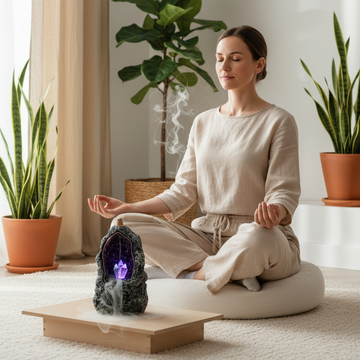
Yes, you can use a meditation cushion for yoga. It can elevate hips for better alignment in seated poses, support knees and ankles, make forward folds more comfortable, and improve restorative poses by reducing strain. Use it under hips, knees, or torso depending on the pose, and prioritize stability over depth.
Why a meditation cushion works so well as a yoga prop
A cushion is basically a soft, stable “height tool.” In yoga, height often equals:
-
easier pelvic tilt
-
less lower-back rounding
-
reduced knee and ankle pressure
-
safer hip opening without forcing flexibility
For most people, comfort and alignment improve immediately.
Best ways to use a meditation cushion in yoga (practical setups)
1) Elevate hips in seated poses (alignment upgrade)
Best for: easy pose, seated breathing, pranayama, gentle twists
How: sit on the front third of the cushion
Why it helps: hips higher → spine stacks easier → less slouching
If your knees float high, add support under each knee (blanket or folded towel).
2) Support knees and ankles (joint-friendly yoga)
Best for: kneeling, child’s pose, hero pose variations
How:
-
place cushion under shins/ankles for padding
-
or sit on the cushion between heels in kneeling sits (if comfortable)
This is a big upgrade if you avoid kneeling because your ankles hurt.
3) Make forward folds calmer (less strain, more breath)
Best for: seated forward fold, wide-legged fold
How: sit on the cushion to elevate hips
Why it helps: you can hinge from hips more easily without rounding lower back
Tip: bend knees slightly to protect hamstrings and reduce back strain.
4) Restorative yoga support (deeper relaxation)
Best for: supported child’s pose, gentle recline
How:
-
hug the cushion and rest your chest on it in child’s pose
-
place cushion under knees when lying down to soften the lower back
Restorative yoga is where a cushion shines: comfort = nervous system downshift.
When a cushion is NOT the best prop
A cushion is great for comfort and elevation, but not always ideal for precision:
-
under hands in weight-bearing poses (blocks are better)
-
as a stable “step” (too soft)
-
for balancing postures (can be unstable)
If you need a firm, exact height, use a yoga block.
If you need comfort and softness, use the cushion.
Quick mini-sequence (10 minutes) using only a cushion
-
Seated breathwork on cushion (2 min)
-
Seated twist (1 min each side)
-
Butterfly pose seated on cushion (2 min)
-
Supported forward fold (2 min)
-
Supported child’s pose hugging cushion (2 min)
Simple, calming, and very repeatable.
Internal links (recommended)
-
Best Posture for Meditation: How to Sit Comfortably Without Pain
-
How to Create a Meditation Space at Home (Simple, Cozy, and Minimal)
CTA (choose one)
-
See a Cushion + Routine Bundle → https://zensoullab.com/
FAQ
Can a meditation cushion replace yoga blocks?
Not fully. Cushions are softer and less precise, but excellent for hips, knees, and restorative comfort.
Is a cushion good for beginners in yoga?
Yes—especially if you’re tight in hips or have knee sensitivity. It helps you access better alignment safely.
Can I use the cushion every day?
Yes. Many people use it for yoga + meditation as a daily comfort tool.