
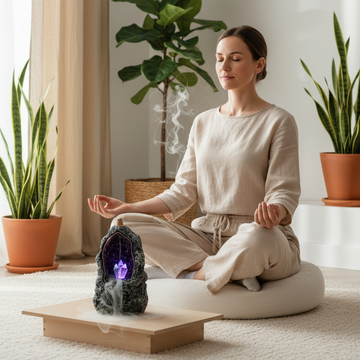

Most people don’t fail at meditation because they lack discipline. They fail because their plan is unrealistic.
They tell themselves they’ll meditate “every morning for 30 minutes,” then life happens, they miss a day, and the habit collapses. If you’re busy, you need a routine that’s small enough to be repeatable—and specific enough that you don’t waste time deciding what to do.
Quick answer: a 10-minute routine works when it has a clear start, a simple structure, and an easy posture. Here’s a routine I’ve seen busy people actually stick with.
Minute 0–1: Set up like you mean it
Don’t do the “half-sit” where you perch uncomfortably and hope your body relaxes. Choose a seat you can maintain.
If you tend to slouch or feel strain quickly, a supportive seat can make the routine feel easier—and when it feels easier, you do it more often.
If you want a comfortable, supportive option designed for floor sitting, you can check this ZenSoulLab ergonomic meditation cushion (memory foam) here:
https://zensoullab.com/products/zensoullab-ergonomic-meditation-cushion-floor-seat-memory-foam-4-colors
Then take one slow breath and decide: “This is 10 minutes. That’s it.”
Minute 1–3: Arrive in the body (no drama)
Keep it simple:
-
Feel both sit bones
-
Relax the jaw
-
Drop the shoulders
-
Soften the belly
If your mind is loud, that’s normal. You’re not trying to delete thoughts. You’re just anchoring.
Minute 3–7: Breath counting (the easiest structure)
Inhale normally. Exhale normally.
Count the exhale from 1 to 10, then restart at 1.
If you forget where you are, just go back to 1. No self-scolding.
This part works because it’s gentle structure. Busy minds like structure.
Minute 7–9: One honest check-in
Ask yourself one question—not ten, not a whole therapy session. Just one:
“What’s the strongest feeling in my body right now?”
Name it quietly: tight, heavy, restless, open, tired.
Naming doesn’t solve everything, but it reduces the “background noise” that makes people spiral.
Minute 9–10: Close with one practical intention
Keep the intention small and real:
-
“I’ll speak slower today.”
-
“I’ll take one real break.”
-
“I’ll put my phone down for lunch.”
Then stand up gently. The point of meditation isn’t to have a perfect session. It’s to become a little more available for your real life.
How to make this routine actually stick
-
Attach it to an existing habit: after coffee, before shower, after work, before bed
-
Aim for 5 days a week, not 7
-
If you miss a day, don’t “restart.” Just do the next one
-
Keep your setup visible so starting feels easy
If you want more beginner-friendly meditation guidance, routines, and home practice setup ideas, explore https://zensoullab.com/
FAQ
Q1: Is 10 minutes of meditation enough
A: Yes. Ten minutes done consistently often beats long sessions done rarely. Consistency builds the skill.
Q2: What if my mind won’t quiet down
A: That’s normal. Use a simple structure like breath counting. When you get distracted, return to 1 without judging yourself.
Q3: When is the best time to meditate
A: The best time is the time you’ll repeat. Many people succeed by attaching it to coffee, after-work decompression, or bedtime.
Q4: Do I need a special posture
A: No, but you do need a posture you can maintain comfortably. Chair meditation is valid, and supportive seating can help reduce strain.
Q5: How do I stop quitting after a few days
A: Make the routine smaller, attach it to an existing habit, and remove friction by keeping your setup ready and visible.