
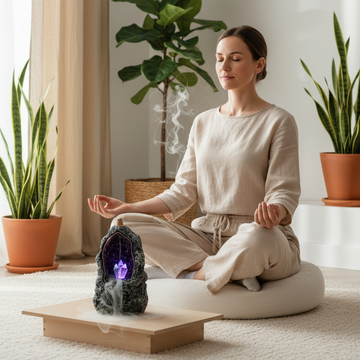

If your meditation starts upright and ends with you slowly folding forward like a tired houseplant, you’re not alone. Slouching is usually not a willpower problem. It’s a setup problem.
Quick Answer
A stable meditation posture comes from pelvic position + seat height + support, not from “trying harder.” Raise your hips slightly, let your pelvis tip forward naturally, and choose a seat that doesn’t collapse under you.
Why You Slouch (Even When You Know Better)
Most people blame their back muscles, but slouching usually starts lower.
Your hips are too low
When your hips sit lower than your knees, your pelvis rolls backward. Once the pelvis tucks, your spine has to fight to stay upright. That effort doesn’t last long.
Your seat collapses over time
Soft cushions often feel nice for 60 seconds, then compress. Your hips drop, your pelvis tucks, and your shoulders follow.
You’re “holding” posture instead of stacking it
If posture feels like a workout, it won’t be sustainable. Meditation posture should feel supported and calm, not braced.
A Simple Posture Reset You Can Do in 20 Seconds
Use this mid-session reset when you notice slouching.
Step 1: Find your sit bones
Shift slightly left-right until you feel the two points under your seat. Rest there.
Step 2: Lift the crown, soften the ribs
Imagine your head gently floating upward. At the same time, soften the front ribs so you’re not puffing the chest.
Step 3: Let the pelvis tip forward a little
Not a big arch. Just enough that your lower back stops rounding.
Step 4: Relax the shoulders downward
Shoulders down and wide, jaw soft. That alone changes the entire “slump” pattern.
Choose a Setup That Makes Upright Feel Easy
You don’t need a dramatic meditation throne. You need something that quietly does two jobs: lift your hips and give you a stable base.
Try the “hips slightly above knees” test
Sit down and check: are your knees higher than your hip crease? If yes, you’ll likely slouch. Raise the seat until your thighs angle slightly downward.
Pick support that stays consistent
If you sit on something that compresses, your posture will change mid-session. A firmer, supportive seat helps you stay aligned without effort.
If you want a stable seat designed to keep the hips supported and reduce posture collapse, you can see ZenSoulLab’s T-shaped ergonomic cushion here:
https://zensoullab.com/products/zensoullab-t-shaped-ergonomic-meditation-cushion-with-buckwheat-hull-filling
A 7-Day “No-Slouch” Practice Plan (Realistic, Not Perfect)
Days 1–2: Short sits, clean setup
Do 8 minutes. Focus only on seat height and pelvic position.
Days 3–4: Add one mid-session reset
At minute 4, do the 20-second posture reset above.
Days 5–6: Extend to 12 minutes
Keep the posture soft. If you’re bracing, you’re forcing it.
Day 7: Choose comfort over aesthetics
Use the position you can repeat tomorrow. Consistency beats “looking right.”
FAQ
Is slouching during meditation bad
It’s not “bad,” but it usually signals that your seat height or pelvic position isn’t working. If you keep slouching, you’ll likely feel more back fatigue and less focus.
Do I need stronger back muscles to sit upright
Sometimes strength helps, but most slouching is solved faster by adjusting hip height and using a stable seat so posture doesn’t rely on muscle effort.
Should I force my shoulders back
No. Forcing shoulders back often creates tension. Think “shoulders down and wide,” with a naturally open chest.
What if I can’t sit cross-legged comfortably
That’s fine. You can meditate kneeling (with support) or in a chair. The goal is a calm, sustainable posture.
If you want more simple, beginner-friendly guidance for building a comfortable home practice, explore https://zensoullab.com/