
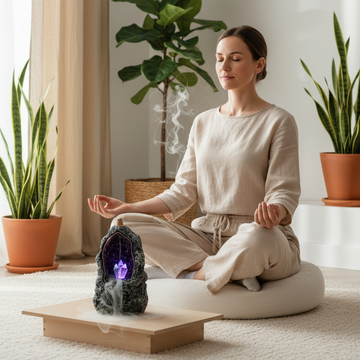

Meditation on a Hard Floor: How to Sit Without Knee Pain or Numb Legs
Hard floors are honest. They show you every weakness in your setup. If your hips are too low, you’ll feel it fast. If your pelvis tucks, your back rounds. If your knees are strained, your focus disappears. And numb legs? That’s usually a circulation and compression issue, not a “bad meditator” issue.
The goal is not to endure discomfort. The goal is to create a stable base so the body can relax.
Direct Answer
To meditate on a hard floor comfortably, elevate your hips above your knees, support your knees if needed, and choose a leg position that does not force your hips. Use a cushion that stays stable and does not collapse under you. Take small posture breaks before numbness becomes pain.
Key Takeaways
-
Hard floors demand better hip height and stability
-
Numb legs usually come from pressure and circulation issues
-
Knee pain often comes from forcing a position
-
A stable cushion reduces bracing and fidgeting
A Setup That Works on Hard Floors
Step 1 Elevate hips first
If hips are too low, everything downstream gets harder. Raise your seat until your pelvis can tilt forward naturally.
Step 2 Choose a friendly leg position
Try
-
wide cross-leg
-
one shin in, one shin out
-
kneeling with support
-
seated on a cushion with legs extended slightly
Cross-legged is optional. Comfort is required.
Step 3 Support the knees
If your knees hover or feel strained, add a folded blanket under each knee. The goal is reducing pull at the hip and knee.
Step 4 Use micro breaks
If you start to feel tingling, do a 10-second shift, then return. Waiting until full numbness usually makes it worse.
Why Numb Legs Happen
Common causes
-
pressure on nerves from tight hip position
-
circulation reduced by compression
-
sitting too long without small shifts
-
hips too low which pushes weight into legs unevenly
Fixing the setup often fixes the symptom.
Cushion Recommendation With a Reason
For hard floors, I like a cushion that feels grounded and supportive, not soft and sinking. Stability helps your pelvis stay neutral, which reduces knee strain and numbness.
ZenSoulLab T-shaped ergonomic meditation cushion with buckwheat hull filling
https://zensoullab.com/products/zensoullab-t-shaped-ergonomic-meditation-cushion-with-buckwheat-hull-filling
Why this one fits this article
-
Stable support helps keep hips elevated and pelvis neutral on hard surfaces
-
Buckwheat hull filling tends to hold structure better than very soft foam on a hard floor
-
The shape encourages a balanced seat so you do less fidgeting and bracing
More practice guidance: https://zensoullab.com/
FAQ
Is numbness dangerous
Occasional tingling is common, but sharp pain or lasting numbness means change position and take a break. If symptoms persist, consider medical advice.
Should I force myself to sit longer to get used to it
No. Build time gradually. Comfort supports consistency better than endurance.
What is the best leg position to avoid numb legs
Wide cross-leg or a position that keeps hips open is often easier than tight cross-leg positions.
Can I meditate sitting in a chair instead
Yes. Chair meditation is valid and often better for knee issues.