
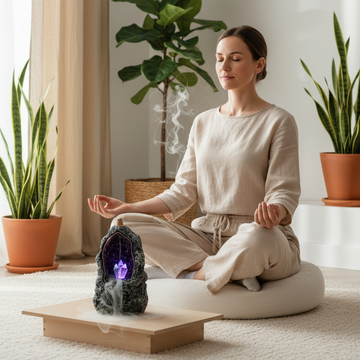

Introduction: Turn your living room into a meditation corner setup that cues calm
You know that moment when you sit down on the couch to “relax,” and somehow your mind starts scrolling through worries like it’s on autopilot? The laundry, the texts you haven’t answered, the thing you said three years ago, tomorrow’s meeting. Your living room might look peaceful, but your body doesn’t always get the memo.
Here’s the gentle truth: your environment trains your nervous system. Without meaning to, many of us have taught our living rooms to signal “consume, perform, stay alert” (TV, work laptop, phone). The good news is you can retrain that association—without renovating, without buying a bunch of stuff, and without needing a separate room.
This post is about creating a tiny meditation nook—a meditation space at home that acts as a “cue for calm.” Think of it as a friendly signal to your brain: “When I sit here, we downshift.” If you’ve been wanting a more consistent mindfulness practice, if you’re craving anxiety relief, or you just want better sleep, a small, intentional corner can be surprisingly powerful.
The science/why: How a calming room setup retrains your nervous system to reduce stress
Let’s get grounded in the “why,” because it makes the “how” feel easier to trust.
When life feels busy, your body often lives in a low-grade stress response. That response is driven by your nervous system—particularly the sympathetic branch (the “go” gear). If your body perceives threat (deadlines, doomscrolling, conflict, even too much stimulation), it can keep cortisol and adrenaline circulating. Over time, that can show up as tension, irritability, shallow breathing, and trouble winding down at night.
A dedicated meditation corner setup works like a behavioral shortcut. Your brain is constantly learning through association: place + posture + repeated action = expectation. When you repeatedly sit in the same spot for a short guided meditation or quiet breathing, your nervous system begins to recognize that setup as safe. That sense of safety supports parasympathetic activation (the “rest and digest” gear), which is the state most linked with recovery, anxiety relief, and mental health benefits like emotional regulation.
Two key mechanisms are at play:
- Classical conditioning: Just like your brain can associate the couch with TV and snacks, it can associate a specific corner with calm and presence.
- State-dependent learning: The more often you practice settling your body in one place, the more easily your body returns to that settled state—sometimes in less than a minute.
And because stress often disrupts sleep, this matters for nights too. When your evening environment is loud (visually or emotionally), your brain doesn’t fully shift out of alertness. A small, consistent calming area can support a smoother transition toward better sleep.
So yes—this is “just a corner.” But it’s also a way to communicate with your physiology: “We’re safe now. We can soften.”
The how-to deep dive: Build a meditation corner setup that supports consistency
You don’t need perfection. You need repeatability. Below are five grounded steps—simple enough for real life, structured enough to create consistency in your daily routine.
Step 1: Choose a location that your brain can learn (and keep it stable)
Pick a spot in your living room that can stay relatively unchanged. A corner by a window, a space beside the couch, or even a section of the rug works. The main goal is predictability. If you move it every day, you lose the conditioning effect that makes a meditation nook so powerful.
When deciding, consider:
- Low traffic: Fewer interruptions means less vigilance in your nervous system.
- Soft light: Bright overhead lights can keep the body in “day mode.” A lamp or natural light is often more settling.
- Visual simplicity: Clutter can act like cognitive noise.
This step is where home sanctuary ideas become practical. Your “sanctuary” doesn’t have to be big—it just needs to be reliable.
Step 2: Make your seat the anchor (posture is not about being “good”)
Your body will not settle if it’s negotiating discomfort. A supportive, comfortable seat is one of the fastest ways to make meditation feel approachable—especially if you’re trying to reduce stress and your body is already holding tension.
A few basics of meditation posture that help your nervous system relax:
- Hips slightly higher than knees (reduces strain on lower back and hips).
- Spine tall but not rigid (think “stacked,” not “stiff”).
- Jaw and shoulders soft (these often brace under stress).
If you like sitting on the floor, a meditation cushion can help you find that supportive angle without forcing flexibility. If you want a cushion that supports an ergonomic pelvis position and helps you stay steady, you might explore a T-shaped ergonomic meditation cushion as part of your setup.
If floor sitting isn’t accessible right now, that’s not a problem—it’s information. You can still build a powerful mindfulness routine at home in a chair (we’ll compare approaches later).
Step 3: Add one “signal object” (a cue that says: now we settle)
Your meditation nook should have a simple, repeatable cue—something you only use for this purpose. The point isn’t decoration; it’s conditioning. Over time, one small object can become a nervous-system shorthand for calm.
Choose one:
- A candle or lamp you turn on only when you practice
- A small bowl or stone you touch before you sit
- A folded blanket you place on your lap
- A gentle sound (a short bell tone) that begins and ends practice
This is part of an effective calming room setup: not more stuff, just clearer signals.
Step 4: Use two core methods: breathwork techniques + body scan
When people say “I can’t meditate,” it often means “I don’t know what to do with my attention.” So let’s keep it concrete. These two methods are practical, beginner-friendly, and backed by what we know about the stress response.
Method A: Breathwork techniques (3 minutes)
The breath is one of the most direct ways to communicate with the nervous system. Slow exhalations can help shift you out of activation. Try this:
- Inhale through the nose for 4
- Exhale through the nose (or softly through the mouth) for 6
- Repeat for 8–12 rounds
If counting feels stressful, just emphasize the exhale: “longer out than in.” This supports downshifting without forcing anything.
Method B: Body scan (5–10 minutes)
A body scan is a structured way to release tension you may not realize you’re holding. It’s also one of the most reliable tools for winding down in the evening if you want better sleep.
Simple body scan sequence:
- Notice contact points (feet, seat, hands)
- Soften the forehead and jaw
- Relax shoulders down and back
- Unclench belly and pelvic floor (if safe/appropriate)
- Feel legs grow heavy
When your mind wanders (it will), you’re not failing—you’re practicing the return. That return is the muscle that delivers long-term mental health benefits.
If you prefer structure, use a short guided meditation that specifically includes breath and a scan. The key is repetition: same corner, same cue, same practice length.
Step 5: Lock in a tiny daily routine (consistency beats intensity)
If you’re building a mindfulness practice, you don’t need a heroic schedule. You need a realistic one. A daily routine that you can keep on your worst day is the one that changes your baseline stress over time.
Try one of these “tiny but real” options:
- 3 minutes of breathing in your nook before coffee
- 7 minutes of guided body scan after you brush your teeth
- 10 minutes after work before you talk to anyone (a transition ritual)
The habit is easier when the environment helps you. When your living room contains a clear meditation corner setup, you’re not relying on motivation—you’re relying on design.
Tool kit: Cushions, props, and a simple zafu and zabuton set approach
You can do this with almost nothing, but the right props can make your practice feel more comfortable—and comfort matters when your goal is to reduce stress, not “push through.” Consider this a friendly toolkit, not a shopping list.
Core items for a meditation space at home:
- Cushion or zafu: Supports hips and spine for steadier meditation posture.
- Mat or zabuton: Cushions knees/ankles and defines the space (a classic zafu and zabuton set vibe without needing anything fancy).
- Blanket: Warmth signals safety; also supports knees or lower back.
- Small timer: Removes clock-checking (a subtle stress trigger).
- Optional eye pillow: Helpful for body scans and evening practices for better sleep.
If you want a cushion that offers a stable, supportive feel for longer sits—especially if you’re working on consistency—consider a supportive meditation cushion with resilient structure to help maintain a comfortable seat without bracing.
One practical tip: keep your props visible. If your cushion is hidden in a closet, your brain reads “optional.” If it’s quietly in the corner, your brain reads “this is who we are now.”
Common obstacles (FAQ style): Meditation space at home, stress, and real-life interruptions
What if my living room is small or shared (kids, roommates, partners)?
Small is fine. Shared is fine. The goal isn’t silence—it’s a consistent cue. Pick a corner that’s “yours” for a few minutes a day. If privacy is limited, use a visual boundary (a folded blanket, a small mat, or a screen) and a time boundary (same time daily). Even two minutes of breathwork techniques in a defined spot can create real anxiety relief over time.
If you’re interrupted, treat it like training: pause, soften, and return when you can. That returning is the practice.
I can’t sit still—does that mean meditation isn’t for me?
Not at all. Restlessness is often a sign of an activated nervous system, not a personal flaw. Start shorter. Use structure. Try a guided meditation that gives your mind something specific to do (breath counting, body scan, labeling sounds).
Also check your meditation posture. If your hips are tight or your lower back is working too hard, your body will protest. Adjust your seat height, add a cushion, or switch to a chair. The more physically supported you are, the less your brain has to manage discomfort—and the easier it is to settle.
How long before I notice mental health benefits or better sleep?
Some people feel calmer after one session, especially with breathwork techniques that lengthen the exhale. But deeper mental health benefits—like steadier mood, less reactivity, and more reliable better sleep—usually come from consistency over weeks.
A realistic timeline many people experience:
- Days 1–7: You notice how busy your mind is (this is progress, not failure).
- Weeks 2–4: Small drops in baseline stress; easier transitions after work.
- Weeks 4–8: More accessible calm, improved self-regulation, sleep becomes easier to initiate.
The corner helps because it reduces friction. It turns practice into something your body expects.
Comparison: Chair vs. cushion, and morning vs. night for a mindfulness routine at home
There isn’t one “right” way—there’s the way you’ll actually do. Here’s a grounded comparison to help you choose what fits your life.
Chair vs. Cushion
- Chair: Great if you have knee/hip pain, limited mobility, or you’re building confidence. Keep feet flat, sit toward the front of the chair, and support your lower back if needed.
- Cushion (floor): Helpful for creating a clear ritual and stable base. A comfortable seat can make longer sessions feel more natural and reduce fidgeting tied to discomfort.
Morning vs. Night
- Morning practice: Sets your nervous system tone before inputs (news, email). Often best for consistency and reduce stress throughout the day.
- Night practice: Best for downshifting the stress response, especially with a body scan. Often supports better sleep when paired with dim lighting and less screen time.
If you’re unsure, start with morning for habit stability, and add 3 minutes at night when you want extra anxiety relief.
Conclusion: A meditation corner setup is a small choice that changes your baseline
Making your living room a “cue for calm” isn’t about aesthetic perfection. It’s about building a gentle, reliable relationship with your nervous system. When you create a tiny meditation nook—and return to it with even a few minutes of mindfulness practice—you’re teaching your body a new pattern: pause, breathe, settle.
Small space. Clear cue. Repeat often. That’s how you train your brain to de-stress.
Start simple: pick the corner, choose one signal object, and commit to a short daily routine you can keep. Add breathwork techniques for quick downshifts and a body scan for deeper unwinding. Over time, that little corner becomes more than a spot in your home—it becomes a refuge you can access even on hard days.
If you want, take two minutes today. Sit. Exhale longer than you inhale. Let your shoulders drop. That’s enough to begin.