
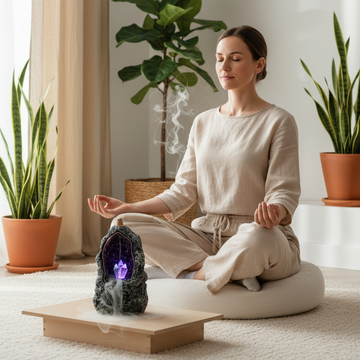

Pins-and-Needles in Meditation: Understanding legs falling asleep during meditation
You settle in. You’re finally doing your mindfulness practice. The breath starts to smooth out, your shoulders drop… and then it happens: that creeping numbness in your foot, a hot-cold fizz in your calf, the unmistakable “my leg is gone” sensation. Suddenly your attention isn’t on awareness or kindness—it’s on survival.
If you’ve been dealing with legs falling asleep during meditation, you’re not doing anything wrong. This is one of the most common issues people face—especially in cross-legged positions—and it can derail your consistency fast. You might even start wondering if meditation “just isn’t for you.”
Here’s the grounded truth: pins and needles usually isn’t a meditation problem—it’s a setup and circulation sitting posture problem. And the fix is often simple, practical, and surprisingly compassionate: adjust the angles, support the joints, and give your body a comfortable seat it can trust.
In this guide, we’ll cover what’s actually happening in your legs, why it can feel worse when you’re trying to relax, and the five prop-based fixes that work in real life—without turning your meditation into a furniture engineering project.
The science of pins and needles meditation: nervous system, circulation, and stress response
Let’s demystify the “pins and needles meditation” experience without making it clinical or scary.
That numb, tingling feeling most often comes from one (or a combination) of these factors:
- Nerve compression (common around the peroneal nerve near the knee/outer shin, or through the hip/ankle chain)
- Restricted blood flow due to pressure points or sharp joint angles
- Static loading—holding a position too long without micro-adjustments
When you sit cross-legged on the floor with a low seat, your knees often lift above your hips. That closes the hip angle and increases pressure through the outer thighs, knees, ankles, and feet. The result can be numb feet meditation, calves that “buzz,” or a whole leg that feels like it disappeared.
Now layer in the nervous system piece. When you begin to relax, your body may shift from a revved-up stress response toward a calmer state. That transition can make sensations more noticeable. If you’re used to running on stress hormones like cortisol, stillness can feel loud at first.
Ironically, the moment your system starts to downshift—when meditation is beginning to reduce stress—you might notice discomfort more clearly. It’s not that meditation causes the problem; it’s that you finally have enough space to feel what was already happening.
This is also why fixing posture isn’t just about physical comfort. A reliable seat supports your anxiety relief by telling the nervous system: “We’re safe. We can settle.” When your body isn’t bracing against pain or numbness, you access more of the mental health benefits of practice—clarity, emotional regulation, and, yes, even better sleep over time.
The how-to deep dive: 5 prop fixes for numb feet meditation and better circulation sitting posture
Below are five practical adjustments (all prop-based) that address the most common mechanical causes of legs falling asleep. You don’t need to do all of them. Start with the one that matches your situation, then build from there.
1) Raise your seat: the zafu height fix that changes everything
If your knees are floating up and your hips are lower than your knees, your body is working harder than it needs to. Raising your seat usually improves circulation and reduces nerve compression quickly.
What you’re aiming for:
- Hips slightly higher than knees (gentle forward tilt of the pelvis)
- Spine stacks naturally without forcing “perfect posture”
- Knees have somewhere to rest (on the floor or props)
This is where zafu height matters. Too low = collapsed hips and pressure down the legs. Too high = instability and gripping in the hips. The sweet spot lets your pelvis tip forward a few degrees so your weight distributes through your sit bones instead of compressing soft tissue and nerves.
If you want a supportive option that helps create that forward pelvic tilt while staying steady, consider a cushion designed for ergonomic support like the ergonomic meditation cushion. The right shape can make it easier to find a meditation posture that feels grounded rather than strained.
2) Add a base layer: use a zabuton mat to protect ankles and pressure points
If you’re sitting on a hard floor, your ankles and feet can get compressed even if your seat height is decent. A zabuton mat (or any dense padded mat) reduces pressure points, supports the ankles, and makes small adjustments easier.
Think of the mat as the “insulation” layer between your body and the floor. It won’t fix everything on its own, but it can be the difference between “tingly after 8 minutes” and “stable for 20.”
Try this simple setup:
- Place the mat down first (so knees and ankles are cushioned)
- Put your cushion on top, near the front edge of the mat
- Let your knees rest on the mat (or on extra props—see step 3)
This setup spreads your weight and reduces the “pinch points” that lead to pins and needles.
3) Support the knees: props under thighs to prevent nerve compression
If your knees hover, your hips and outer thighs often grip to hold you up. That gripping can compress nerves and reduce blood flow down the legs.
The fix is straightforward: support the knees so the legs can relax.
Use one or two props under each knee or thigh:
- Folded blanket(s)
- Yoga blocks on the lowest height (with padding if needed)
- A rolled towel under the outer thigh (gentler than a hard block)
When the knees are supported, the hips soften. When the hips soften, the legs usually stop going numb. It’s one of those “small change, big result” adjustments.
4) Choose a leg position that respects your hips (not your ideals)
Sometimes the issue isn’t “you need more props”—it’s “this leg shape isn’t right for your body today.” A sustainable daily routine is built on adaptability, not proving something.
If you’re getting numbness in one side consistently, experiment with positions that reduce twist and compression:
- Burmese position (both shins in front, not stacked)
- Seiza/kneeling (often great for circulation if ankles tolerate it)
- Chair meditation (feet flat, knees at 90 degrees)
One underrated tip: alternate which leg is in front each sit. Small asymmetries add up. Switching sides supports consistency because your body feels less “worked over” by repetition.
5) Build in micro-movement: circulation-friendly adjustments without breaking focus
Meditation doesn’t require you to be statue-still. If your intention is to stay present, a tiny adjustment done mindfully is still practice.
Try a “circulation reset” when tingling starts:
- Gently lengthen the spine (as if making space between vertebrae)
- Rock the pelvis a few millimeters forward/back to redistribute weight
- Unclench toes, soften the soles of the feet
- If needed, slowly change leg position with full awareness
If you’re using guided meditation, you can even plan this in: choose a track that includes a midpoint pause, or set a soft timer every 10 minutes to check posture without judgment.
Tool kit for a comfortable seat: cushions, props, and simple setup essentials
Let’s make this practical. The goal isn’t to buy a mountain of gear. The goal is a comfortable seat that supports your nervous system and helps you stay with your mindfulness practice long enough to feel the benefits.
Here’s a basic prop toolkit that covers most needs:
- Meditation cushion (to dial in height and pelvic tilt)
- Zabuton mat or dense pad (to protect ankles/knees and reduce pressure points)
- Folded blanket (the most versatile knee/hip support)
- Yoga blocks (for stable knee support if blankets compress too much)
- Small towel (for fine-tuning under ankles or outer thighs)
If you like a cushion with structured support—especially if you’re working with tight hips or want stability for longer sits—the supportive meditation cushion can help you maintain a steady meditation posture without over-efforting. The right support often prevents the subtle collapse that leads to leg numbness.
Quick setup checklist (60 seconds):
- Sit on the front half of the cushion (not the middle-back)
- Check: hips slightly higher than knees
- Support knees if they hover
- Let feet relax—no hard flexing or clawing toes
- Choose “stable enough” over “perfect”
Common Questions (FAQ): pins and needles, numb feet, and staying consistent
Is it dangerous if my legs falling asleep during meditation keeps happening?
Most of the time, occasional numbness is a mechanical issue—pressure on nerves or reduced circulation from how you’re sitting. It’s usually resolved by adjusting zafu height, adding a zabuton mat, or supporting the knees.
That said, persistent or intense numbness, pain, weakness, or symptoms that continue long after you stand up are signals to get medical guidance—especially if you have diabetes, neuropathy, back issues, or circulation concerns. Meditation should challenge your attention, not your health.
What if I can’t focus because of pins and needles meditation sensations?
Two things can be true: you can practice working with sensation and you can set your body up so the sensation isn’t overwhelming. Start by addressing posture first—because constant numbness is distracting in a way that doesn’t meaningfully train awareness.
Then, once you’ve reduced the intensity, you can use a simple technique:
- Name the sensation softly (“tingling,” “pressure,” “warmth”)
- Notice whether it’s steady, pulsing, moving, or changing
- Return to the breath without forcing anything
If your mind is already overloaded, switch to guided meditation for a while. External structure can support anxiety relief and keep you from spiraling into “I’m doing it wrong.”
Will this get better with practice, or do I need to change my daily routine?
It often gets better with smarter practice. Your body adapts, hips open gradually, and you learn which adjustments prevent numbness. But you don’t need to “push through” pins and needles for months hoping it resolves.
For most people, the winning formula is:
- Consistency over intensity (10 minutes daily beats 45 minutes once a week)
- Supportive posture first, then stillness
- Mix sitting with walking meditation or gentle stretching
Also consider adding a brief body scan before you sit to relax the legs and soften unconscious bracing. A 2-minute scan can reduce the stress response and lower baseline tension—supporting reduce stress goals and contributing to better sleep over time.
Comparison: chair vs cushion, morning vs night, and breathwork techniques vs body scan
Different approaches work for different bodies and different seasons of life. Here’s a grounded comparison to help you choose what supports your practice right now.
- Chair vs. Cushion: A chair is often best if you get numb feet quickly, have knee/hip pain, or are rebuilding consistency. A floor cushion can feel more rooted and traditional, but it demands better hip mobility and smarter prop use (mat + knee support).
- Morning vs. Night: Morning practice can set your nervous system tone and support cortisol regulation throughout the day. Night practice may be better for better sleep, especially when paired with slower pacing and low light—but if you’re exhausted, you may slump and compress legs more.
- Breathwork techniques vs. Body scan: Breathwork techniques (like lengthening the exhale) can calm the stress response quickly and support anxiety relief. A body scan is often better for catching hidden tension patterns—like gripping in the hips or feet—that contribute to numbness.
The best choice is the one that keeps you practicing. The mental health benefits come from repetition—small sits, repeated often, with a body that feels safe enough to settle.
Conclusion: a sustainable mindfulness practice starts with circulation and kindness
If you take one thing from this: legs falling asleep during meditation is usually a signal to adjust your setup, not to quit. Your body is giving feedback. When you respond with practical support—raising your seat, using a mat, supporting knees, choosing a wiser leg position—you’re not “coddling yourself.” You’re building a stable foundation for real stillness.
As your posture becomes more supportive, you’ll likely notice the practice deepening in quieter ways: less bracing, fewer interruptions, more ease in the breath. That’s when meditation starts to reliably reduce stress, support anxiety relief, and contribute to better sleep—not because you forced anything, but because you made it sustainable.
Your job isn’t to endure discomfort to earn calm. Your job is to listen closely, adjust wisely, and keep returning—gently—to this moment.
If you want, choose one prop fix from above and test it for a week. Keep notes. Make it a simple experiment inside your daily routine. That’s how consistency becomes natural—and how your practice starts feeling like a place you can actually rest.