
Short answer
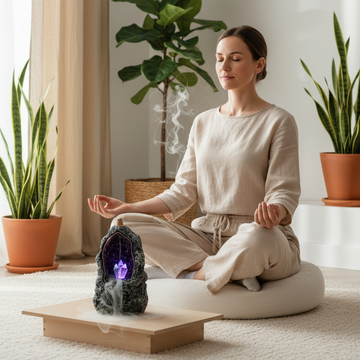
A backflow incense burner works by using a backflow cone with a small internal channel that directs smoke downward through a hole at the base. The burner’s hidden pathways guide that heavier, cooled smoke through carved channels, creating a waterfall-like flow. For best results you need backflow cones, a level surface, clean channels, and a draft-free room.
The 3 components that make backflow “work”
A waterfall smoke effect is only possible when three things work together:
-
Backflow cone (special design)
-
Burner with a smoke pathway
-
Still air (environment matters)
If any one of these is off, the smoke won’t flow smoothly.
1) The backflow cone: the real secret
Backflow cones aren’t just “regular cones.” They’re engineered with:
-
a small hole/tunnel that leads from the burning area to the base
-
a design that encourages smoke to exit through that hole consistently
When the cone burns, smoke can travel down through the internal channel and out of the bottom hole. Without that hole, the smoke behaves like normal incense: it rises.
Practical takeaway:
If your cone has no bottom hole, it’s not a backflow cone.
2) The burner: it guides smoke like a hidden riverbed
A backflow burner contains:
-
a top platform to seat the cone
-
a hidden cavity where smoke enters
-
carved grooves/channels where smoke exits
These channels guide smoke downward and outward in a controlled path. That’s why the smoke appears to “pour” instead of drifting randomly.
Why cleaning matters:
Residue can block channels and break the waterfall effect.
3) The environment: air movement can ruin the illusion
Backflow smoke is visually delicate. Drafts from:
-
fans
-
AC vents
-
open windows
-
walking past quickly
can disrupt the flow and make it look messy or weak.
Best conditions:
-
quiet room
-
burner placed away from airflow
-
stable temperature
-
flat surface
Why does smoke flow downward at all?
You don’t need physics jargon to use it, but here’s the simple idea:
Smoke from a backflow cone can cool slightly and become denser near the outlet, and the burner’s design guides it downward through a sheltered pathway. The effect looks strongest when the smoke can “settle” into the channels without being disturbed by moving air.
Step-by-step setup for the best waterfall effect
Follow this exact setup to get consistent results:
-
Place the burner on a flat, stable surface
-
Avoid uneven shelves or soft fabric that tilts.
-
-
Use the correct cone
-
Confirm a bottom hole.
-
-
Light properly
-
Hold flame to tip for 10–15 seconds until it glows.
-
-
Extinguish the flame gently
-
Let it smolder (not a big flame).
-
-
Wait 30–90 seconds
-
The cascade often starts after a short delay.
-
-
Reduce airflow
-
Turn off fans, avoid vents, close windows.
-
Troubleshooting (quick fixes)
If it’s not flowing well, try these in order:
-
Move away from drafts (most common fix)
-
Relight the cone and let it burn longer before blowing out
-
Check cone type (must be backflow)
-
Clean residue from cone seat and channels
-
Level the burner (even a slight tilt changes flow)
Internal links (recommended)
-
What Is a Backflow Incense Burner? The Waterfall Smoke Effect Explained
-
Backflow Cones vs Regular Incense: What Works (and What Doesn’t)
-
How to Light Backflow Incense Cones (A Simple Step-by-Step Guide)
CTA (choose one)
-
Explore Backflow Burners → https://zensoullab.com/collections/backflow-incense-burner
FAQ
Can I make backflow work with regular cones?
No. Regular cones don’t have the bottom channel design.
Why does it work sometimes but not other times?
Airflow, surface level, cone quality, and residue buildup can all change performance.
How long until the waterfall effect starts?
Usually within 30–90 seconds after the cone starts smoldering.