
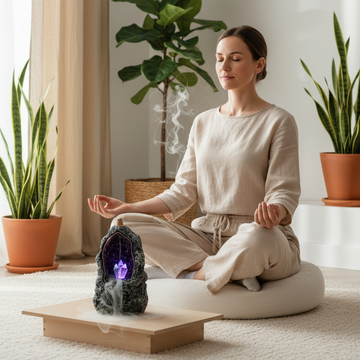

Work stress reset: a 3-minute desk meditation for replay loops
When a conversation at work goes sideways, the replay can feel automatic: you re-run your words, their tone, what you should have said, and what it might mean. This simple work stress desk meditation is designed for a desk chair, takes about three minutes, and helps you shift from mental rehashing back to the next clear step.
You can interrupt rumination in about three minutes by anchoring attention in your breath, your seat, and the next small action.
Why difficult conversations keep replaying
Replaying a tense meeting is often your mind trying to protect you: it scans for what went wrong, what to avoid next time, and how to regain control. The problem is that the same loop can steal focus from the rest of your day. A short pause can create a clean break between what happened and what you do next.
Instead of trying to force yourself to stop thinking, you will give your attention a job that is specific, physical, and time-limited. That combination often makes it easier to disengage from the spiral without needing perfect calm.
Set up your desk space in 10 seconds
You do not need incense, silence, or a special outfit. You just need a stable seat and a little room to breathe.
- Place both feet flat on the floor (or on a sturdy footrest if your chair is high).
- Let your hands rest on your thighs or the desk, palms down for steadiness.
- Soften your jaw and let your shoulders drop one notch.
- Choose one tiny visual anchor: the edge of your monitor, a sticky note, or a pen.
If you like a firmer, more supportive seat for brief resets, a meditation cushion can be useful even in an office or home office. The t-shaped ergonomic meditation cushion is designed to support a more upright posture, which can make short sitting practices feel steadier.
The 3-minute practice (with a timer or three slow rounds)
Use a timer if you can, but it is not required. You can also move through three rounds of breath and body attention, keeping everything gentle and practical.
Minute 1: Label the loop, then land
Look at your chosen visual anchor for a moment. In your mind, name what is happening in a neutral way: 'replaying' or 'planning' or 'judging.' Keep it simple and quiet.
Next, feel three points of contact: your feet on the floor, your seat on the chair, and your hands resting. You are not trying to erase the conversation; you are letting your body tell your brain, right now is different from then.
Minute 2: Breathe low and count lightly
Bring attention to the breath in your lower ribs or belly area. Without forcing anything, let the exhale be a little longer than the inhale. If it helps, count: inhale 1-2-3, exhale 1-2-3-4. If your breathing pattern does not match that, adjust to what feels comfortable.
Your mind will likely wander back to the conversation. Each time you notice, return to the next exhale and the feel of your feet. That is the whole rep.
Minute 3: Choose the next right action
Now shift from replay to direction. Ask yourself one of these practical questions and answer in a single sentence:
- What is the smallest useful action I can take in the next 10 minutes?
- What do I actually know, and what am I assuming?
- If I could send one clarifying note, what would it say in one line?
- What can wait until later today?
Then do one physical micro-move to mark the transition: straighten a paper stack, close one tab, or write the action on a sticky note. This gives your attention an immediate landing spot.
If you are in an open office (or on a video call soon)
You can make this almost invisible. Keep your gaze low, keep your hands still, and breathe gently. If someone is nearby, you can simply pause, look at your screen edge, and do three longer exhales. No one needs to know you are resetting.
If you have one minute before a call, do only this: feel both feet, exhale longer than you inhale three times, then write the first sentence you will say on the call. Short, private, and effective for getting unstuck.
How to stop the replay from restarting 20 minutes later
Many people notice the loop tries to come back once the day speeds up again. Rather than fighting it, plan a second, shorter reset.
- Schedule a 90-second check-in later (after lunch or before your next meeting).
- Keep one note titled 'clarify later' so your brain does not have to hold every thought.
- Close the loop with a single action: send a brief recap, ask one clarifying question, or outline what you will do next.
- When you catch the replay again, label it once and return to one long exhale.
If you want a dedicated spot at home to decompress after work, a supportive cushion can help you sit comfortably for short practices without overthinking posture. The unity meditation cushion is an option for creating a consistent reset corner that signals 'work is done' when you sit down.
Common obstacles (and quick adjustments)
If you feel too keyed up to focus: keep the practice more physical. Feel your heels, press toes gently into the floor for two seconds, then release. Repeat three times. The goal is not perfect calm; it is a shift toward steadier attention.
If you feel sleepy: open your eyes fully and sit a bit taller. Take slightly deeper inhales for three breaths, then return to a comfortable rhythm.
If the conversation feels urgent: write one sentence you might say or send later, then return to the breath. You are not avoiding the issue; you are pausing so you can respond with more clarity.
A simple script you can memorize
Use this any time you notice the replay starting:
- Label: 'replaying.'
- Land: feet, seat, hands.
- Breathe: longer exhale for three rounds.
- Decide: one next action in one sentence.
That is it. Three minutes, a clearer head, and a return to what you can actually do next. With repetition, the reset can become a familiar off-ramp when work stress tries to pull you back into the same loop.