
Meditation for Restless Evenings: A Transition Ritual from Work Mode to Home Mode
Restless evenings are common now. You finish work, but your body doesn’t. You’re physically home but mentally still in tasks, messages, and unfinished loops. So you scroll, snack, or pace. You want to relax, but you can’t downshift.
What you need is a transition ritual. A clear “work is over” signal for your nervous system.
Direct Answer
To calm a restless evening, use a 9-minute transition meditation: change environment, ground contact points, use gentle longer exhales, release jaw and shoulders, and choose one calming home action. This teaches your body to shift out of work mode.
Why Your Body Stays in Work Mode
Common drivers:
-
constant screen input
-
unfinished tasks
-
stress hormones still elevated
-
no clear boundary between work and home
-
too much stimulation right after work
A ritual fixes this by creating a predictable downshift cue.
The 9-Minute Evening Transition Ritual
Minute 0 to 2 Change the scene
Turn off bright overhead light if possible.
Put phone away.
Sit down on a stable seat.
Say quietly: Work is over for now.
Minute 2 to 5 Gentle longer exhales
Inhale normal.
Exhale slightly longer, 10 breaths.
Soften jaw and drop shoulders.
Minute 5 to 8 Body scan release
Scan: forehead, jaw, throat, shoulders, belly, hips.
Release each area by 5 percent.
If you notice mental planning, label: planning. Return.
Minute 8 to 9 Choose one home action
Pick one:
-
shower
-
tea
-
5-minute walk
-
light stretching
-
tidy one small surface
Then do it.
A Small Habit That Helps a Lot
Keep your transition practice short and consistent.
If you wait until you’re exhausted, your nervous system is harder to calm.
Cushion Recommendation With a Reason
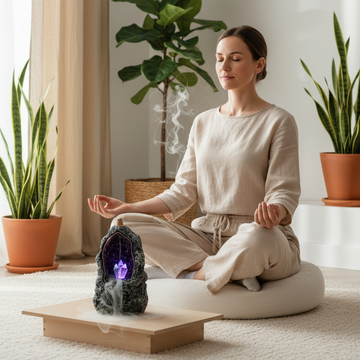
Evening restlessness is often paired with physical discomfort from sitting all day. A supportive, steady seat can make this transition practice feel grounded rather than like another task.
ZenSoulLab Unity meditation cushion with 3D resilient support
https://zensoullab.com/products/zensoullab-unity-meditation-cushion-with-3d-resilient-support
Why I recommend it for evening transitions
-
Stable support helps you settle quickly after a long day
-
It reduces posture bracing that keeps your body in “effort mode”
-
It’s easy to use daily in a living room corner, which turns it into a reliable transition cue
More guidance: https://zensoullab.com/
FAQ In Common Evening Questions
What if I only have 3 minutes
Do 6 longer exhales and one body scan pass over jaw and shoulders. Then do one calming action.
Should I meditate before dinner or after
Either works. Many people like a transition ritual before dinner to reduce stress eating.
What if my evening anxiety spikes
Use eyes-open grounding and shorten the practice. If it’s persistent, longer-term anxiety support may help too.