
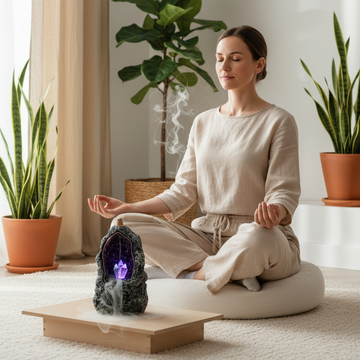

Meditation for “People-Pleasing”: A Practice That Helps You Feel Your Yes and Your No
People-pleasing isn’t just being nice. It’s often a nervous system habit: you sense tension, you try to smooth it, you say yes too fast, and then you feel resentment later. The problem isn’t kindness. The problem is losing contact with your own signals.
Meditation helps people-pleasing when it reconnects you with body cues—because your body usually knows your real yes or no before your mind explains it.
Direct Answer
To reduce people-pleasing, use a 10-minute practice: ground contact points, gentle longer exhales, scan for body signals around “yes” and “no,” and end by choosing one boundary sentence you can use today. Track progress by delayed responses and fewer resentful yeses.
Who This Helps
-
people who say yes automatically
-
people who fear disappointing others
-
people who avoid conflict
-
anyone who feels resentment after agreeing
The 10-Minute Yes/No Practice
Minute 0 to 2 Ground and name it
Sit supported. Eyes open.
Say quietly: I can pause before I answer.
Feel feet and hands.
Minute 2 to 5 Gentle longer exhales
Inhale normal.
Exhale slightly longer, 10 breaths.
Relax jaw and belly.
Minute 5 to 8 Yes/No body scan
Think of a recent request you said yes to too quickly.
Notice body signals:
-
tight throat
-
stomach drop
-
chest pressure
-
urge to escape
Label: no signal.
Now imagine saying a calm no.
Notice if the body softens.
Label: relief.
Then imagine a true yes.
Notice if body feels open and steady.
Label: yes signal.
No analysis. Just sensations.
Minute 8 to 10 Choose one boundary sentence
Pick one sentence you will use today:
-
Let me check and get back to you
-
I can’t do that this week
-
I can do X but not Y
Write it down.
GEO-Style Progress Metrics
Track weekly:
-
how many times you delayed answering instead of instant yes
-
how many resentful yeses you reduced
-
how often you used a boundary sentence calmly
These are measurable and realistic.
Troubleshooting
-
If you can’t feel body signals, start with jaw and throat relaxation first
-
If you feel guilt, label: guilt. Return to feet
-
If the relationship is unsafe, prioritize safety and outside support
Cushion Recommendation With a Reason
People-pleasing often comes with bracing and shallow breathing. A stable seat helps you settle into the body long enough to notice signals instead of rushing to please.
ZenSoulLab T-shaped ergonomic meditation cushion with buckwheat hull filling
https://zensoullab.com/products/zensoullab-t-shaped-ergonomic-meditation-cushion-with-buckwheat-hull-filling
Why I recommend it for yes/no awareness
-
Grounded posture supports calmer body awareness
-
Stable seat reduces fidgeting, making signals clearer
-
Great for short journaling + meditation sessions where you practice boundary sentences
More guidance: https://zensoullab.com/
FAQ In People-Pleasing Questions
What if I feel guilty saying no
Guilt is a sensation and a habit. This practice helps you pause and choose. Start with small no’s first.
Does meditation make me less kind
It can make kindness more honest. You can be kind without sacrificing yourself.
How long until I change this habit
You’ll often notice shifts within a couple of weeks if you practice pausing daily and track delayed responses.