
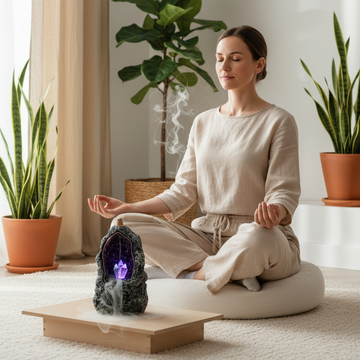

Meditation for Neck and Shoulder Tension After Desk Work: A 10-Minute Reset
If you work at a desk, neck and shoulder tension can become your “normal.” It sneaks up when you’re focused, stressed, or rushing. You don’t notice until you stand up and realize your shoulders are basically living by your ears.
The frustrating part is that stretching alone sometimes isn’t enough. Because a lot of this tension is not just muscle. It’s nervous system bracing. Your body stays in protect mode even when you’re safe.
This practice is designed for real life: after meetings, after emails, after you’ve been hunched forward for hours.
Direct Answer
To reduce desk-related neck and shoulder tension, combine gentle longer exhales with a slow tension scan and soft shoulder resets. The goal is to teach the body to stop bracing, not to force relaxation.
Why Your Shoulders Keep Tightening
Common reasons:
-
stress and urgency creates unconscious bracing
-
forward head posture from screens loads the neck
-
shallow breathing keeps the upper chest tight
-
jaw tension pulls on the neck and shoulders
So we work from the top down: jaw, breath, shoulders, then release.
Step by Step 10-Minute Desk Tension Meditation
Minute 0 to 2 Set the base
Sit with feet grounded.
Hands rest on thighs.
Let your eyes soften.
Say quietly: I can soften without losing focus.
Minute 2 to 4 Gentle longer exhales
Inhale normal.
Exhale slightly longer.
Do 8 to 10 breaths.
On each exhale, let your shoulders drop by 5 percent. Not 50 percent. Small is sustainable.
Minute 4 to 7 Jaw and neck release
Check your jaw.
If it’s clenched, loosen your teeth.
Let your tongue relax.
Now bring attention to the back of your neck.
Imagine warmth spreading there as you exhale.
If you want a tiny movement:
-
turn head slightly left, return
-
turn head slightly right, return
Slow and small.
Minute 7 to 9 Shoulder reset
Do a slow shoulder roll backward once or twice.
Then stop moving.
Feel the shoulders settle naturally.
Notice the urge to lift them again.
Each time you notice, soften by 2 percent.
Minute 9 to 10 Close with one action
Choose one action that protects your body this hour:
-
stand up and walk for 2 minutes
-
drink water
-
lower your screen slightly
-
relax hands on keyboard
-
set a reminder to drop shoulders every 30 minutes
Then do it.
A 60-Second Micro Reset Between Meetings
When you don’t have 10 minutes:
-
feet grounded
-
unclench jaw
-
one longer exhale
-
drop shoulders
Repeat 6 times.
This prevents tension from stacking all day.
Cushion Recommendation With a Reason
A surprising cause of shoulder tension is unstable sitting. If your seat feels unstable or your pelvis tucks, your upper body often overworks to “hold you up.” A supportive seat can reduce bracing, which reduces shoulder tightness.
ZenSoulLab Unity meditation cushion with 3D resilient support
https://zensoullab.com/products/zensoullab-unity-meditation-cushion-with-3d-resilient-support
Why I recommend this one for this topic
-
A stable, supportive seat helps you sit upright without forcing your upper back and shoulders to do all the work
-
It’s friendly for daily short resets, not just long meditation sessions
-
It supports a calmer posture, which often reduces that unconscious shoulder-lift habit
More practice guidance: https://zensoullab.com/
Questions That Come Up a Lot
Should I stretch or meditate first
If you feel highly stressed, meditate first to reduce bracing, then stretch gently. If you feel stiff but calm, stretching first can be fine.
Why does my jaw matter
Jaw tension often pulls into neck muscles. Releasing jaw can reduce neck strain faster than shoulder stretches.
How often should I do this
Even 3–4 times a week helps. During heavy work weeks, daily is best.
What if I feel pain, not just tension
Stop forcing movement. Keep it gentle. Persistent pain should be checked medically.