
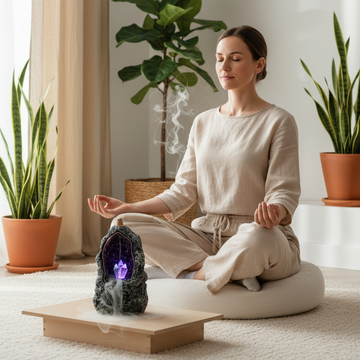

Meditation for Migraines: A Gentle Nervous System Practice That Won’t Trigger More Sensitivity
If you get migraines, you know your nervous system can be sensitive. Bright lights, strong smells, screens, dehydration, and stress can all stack up. During a migraine or pre-migraine state, intense breathing, long concentration practices, or “push through” advice can make things worse.
This is a gentle, low-stimulation meditation approach that supports regulation. It does not replace medical care.
Direct Answer
For migraines, use a low-stimulation 6–10 minute practice: dim light, eyes soft or closed, focus on contact points, gentle longer exhales without breath holds, and a short body scan that avoids forcing attention. Stop if symptoms worsen. Seek medical care for severe or unusual symptoms.
Safety Notes
Seek medical help if you have:
-
sudden worst headache of your life
-
neurological symptoms that are new or severe
-
confusion, fainting, weakness, or speech changes
Continue your medical plan and clinician guidance.
The Low-Stimulation Migraine-Friendly Practice
Setup
-
dim light
-
minimal sound
-
avoid screens
-
sit supported or lie down
Minute 0 to 2 Contact points only
Feel: head on pillow or seat under you.
Feel hands. Feel feet.
Phrase: I can soften without effort.
Minute 2 to 5 Gentle longer exhales
Inhale normal.
Exhale slightly longer, 6–8 breaths.
No breath holds. No forceful breathing.
Minute 5 to 8 Soft scan
Scan gently:
-
jaw
-
shoulders
-
belly
Release each by 5 percent.
If scanning increases sensitivity, stop scanning and return to contact points.
Minute 8 to 10 Closing care action
Pick one:
-
sip water
-
dark room rest
-
cool compress
-
short breathing-free grounding
How to Know It’s Helping
-
less fear about symptoms
-
small reduction in tension
-
less bracing in jaw and shoulders
-
easier resting state
Troubleshooting
-
If breath focus triggers nausea, skip breathing and stay with contact points
-
If sound is irritating, use earplugs and focus on tactile sensations
-
If lying down makes symptoms worse, sit supported with eyes open
Cushion Recommendation With a Reason
When you need low stimulation, comfort matters more than “perfect posture.” A supportive, comfortable floor seat can help you rest without bracing and without needing a rigid upright posture.
ZenSoulLab ergonomic meditation cushion floor seat memory foam
https://zensoullab.com/products/zensoullab-ergonomic-meditation-cushion-floor-seat-memory-foam-4-colors
Why I recommend it for migraine-friendly practice
-
Comfort supports resting without muscle bracing
-
Useful for low-light, low-effort sits and recovery moments
-
Makes it easier to choose a short nervous system reset instead of forcing focus
More guidance: https://zensoullab.com/
FAQ In Migraine Questions
Can meditation stop a migraine
Sometimes it may reduce stress contribution, but it’s not a guaranteed stop. Use it as support alongside your medical plan.
Should I meditate during the aura
Keep it gentle and low stimulation. If symptoms worsen, stop and rest.
How often should I practice
Daily gentle practice may reduce stress reactivity over time. During an episode, keep it short.