
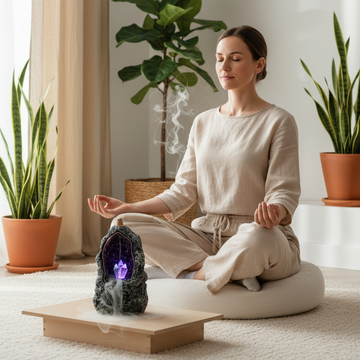

Meditation for a Busy Mind: A Grounding Routine When Thoughts Won’t Slow Down
Some days your mind feels like a browser with 30 tabs open. The moment you sit, your brain starts planning, replaying, worrying, and jumping. You might think you are bad at meditation. Often you are just meeting your real baseline without distractions.
This routine is not about forcing silence. It is about giving your nervous system a steady signal that it can downshift.
Direct Answer
When your mind will not slow down, use a grounding first meditation: feel feet and hands, lengthen the exhale gently, and use a simple structure of label and return. Do 10 minutes. Count returns instead of judging how many thoughts you have.
Key Takeaways
-
A busy mind is normal, especially under stress
-
Grounding works better than trying to control thoughts
-
Gentle longer exhales reduce urgency and physical tension
-
Measuring progress by returns prevents self judgment
Step by Step 10-Minute Busy Mind Meditation
Minute 0 to 2 Ground the body
Sit supported. Feel feet or legs. Feel the seat.
Let hands rest and feel their weight.
Say quietly: Thinking is allowed. Returning is the practice.
Minute 2 to 6 Gentle longer exhales
Inhale normal.
Exhale slightly longer.
Do 12 breaths.
On each exhale, soften jaw and shoulders.
Minute 6 to 9 Label and return
Choose one anchor: hands or breath at nostrils.
When thoughts appear, label once: planning or remembering or worrying.
Return to the anchor.
If you return 20 times, you trained 20 times.
Minute 9 to 10 Close with one intention
Choose one word for the next hour
steady, calm, simple, patient
Then do one small grounding action: drink water or stand and stretch slowly.
What to Do If You Are Still Spinning After Meditation
Do not add more technique. Repeat the same routine later in the day.
Busy minds respond to repetition and predictability.
You can also add a two minute micro reset
feet grounded
6 gentle longer exhales
soften jaw
done
Troubleshooting
If breath focus makes you anxious
Anchor to hands or feet instead. Keep breath background.
If you feel frustrated
Label it judging. Return.
If you feel sleepy
Open eyes slightly with soft gaze. Sit a little taller.
If you feel like it is not working
Look for recovery improvements outside the session. How fast you calm down after stress is a better metric than how quiet your mind gets.
A Comfort Tip That Helps the Mind Settle
If the seat is unstable or too low, your body braces and your mind stays busy. A stable supportive cushion helps you sit without effort and reduces fidgeting.
If you want a stable seat for daily practice, you can check ZenSoulLab’s T-shaped ergonomic cushion here:
https://zensoullab.com/products/zensoullab-t-shaped-ergonomic-meditation-cushion-with-buckwheat-hull-filling
More meditation guidance: https://zensoullab.com/
FAQ
Is it normal to have nonstop thoughts during meditation
Yes. Meditation trains awareness and return. Thoughts do not need to stop for practice to work.
Should I switch methods if my mind is too busy
Not immediately. Use the same simple structure for at least a week. Consistency retrains the nervous system.
How long should I meditate when my mind is racing
8 to 12 minutes works well. Even 4 minutes can help if you are overwhelmed.
What if I cannot sit at all
Try walking meditation for 6 minutes, focusing on foot sensations.