
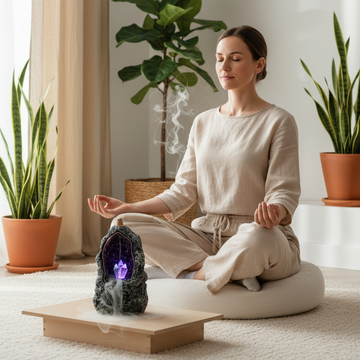

How to Meditate When You Can’t Sit Cross-Legged: Comfortable Alternatives That Still Count
A lot of people assume cross-legged is the “real” way to meditate. Then their knees hurt, their hips feel stuck, and they decide meditation isn’t for them.
That’s a mistake. Meditation is about attention and nervous system regulation. The position is just a container. If the container causes pain, you will stop practicing. So we choose a better container.
Direct Answer
If you can’t sit cross-legged, use a comfortable alternative: wide-leg floor sitting, kneeling with support, sitting on a cushion with legs extended, or chair meditation. The best position is the one you can repeat daily without pain. Comfort supports consistency.
Key Takeaways
-
Cross-legged is optional
-
Knee pain is a signal to modify
-
Stable hip height helps every position
-
Chair meditation is fully valid
Alternatives That Work
Option 1 Wide-leg floor sitting
Sit on a cushion. Let knees open comfortably.
This is often easier on hips and knees.
Option 2 Kneeling with support
Place support under hips. Keep spine stacked.
Do not force deep kneeling.
Option 3 Legs extended with support
Sit on a cushion, legs gently forward, slight bend in knees.
Great for tight hips.
Option 4 Chair meditation
Feet flat. Hands resting.
You can do the same breath and grounding practice.
How to Know You Found a Good Position
-
breath feels easy
-
jaw and shoulders soften
-
you can stay still without pain
-
you can return attention instead of managing discomfort
Cushion Recommendation With a Reason
For people who can’t sit cross-legged, the goal is a stable supportive seat that helps your pelvis stay neutral in many positions, not just one. A cushion that feels steady and versatile makes it easier to find a position that works for your body.
ZenSoulLab Unity meditation cushion with 3D resilient support
https://zensoullab.com/products/zensoullab-unity-meditation-cushion-with-3d-resilient-support
Why this one fits this article
-
It’s a versatile option for wide-leg sitting, kneeling support, and casual daily use
-
The supportive feel helps you stay stable without forcing a traditional pose
-
It reduces the feeling of slipping or collapsing that makes alternatives uncomfortable
More practice guidance: https://zensoullab.com/
FAQ
Is it okay if I meditate lying down
Yes, especially for sleep routines or pain days. If it makes you sleepy, try sitting instead.
What if my knees hurt even with modifications
Use chair meditation and consider gentle mobility work. Do not push through pain.
How long should I sit as a beginner
Start with 5 to 10 minutes. The goal is repeatability.
Will I ever be able to sit cross-legged
Maybe, maybe not. Meditation does not require it. Focus on what supports your practice.