
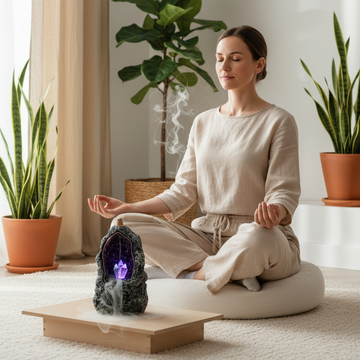

Legs going numb during meditation: what to change first
If your legs falling asleep while meditating keeps interrupting an otherwise steady practice, you are not alone.
Most of the time, small posture and support changes can reduce numbness and help you sit more comfortably.
That tingling or dullness is often a simple signal that pressure, angle, or immobility is limiting circulation or irritating a nerve. It does not mean you are bad at meditation, and it does not mean you must grit your teeth through discomfort. The goal is to create a seat that feels stable, neutral, and easy enough that your attention can return to the breath (or your chosen focus) without constant body-management.
Below are six practical posture fixes, followed by a gentler focus plan you can use the moment you notice sensation changes. Think of these as experiments. Try one change at a time for a few sits, keep what helps, and drop what does not.
Before you adjust: two quick checks
First, notice when the numbness starts. If it shows up at minute 3, the issue is usually compression from angles or height. If it shows up at minute 20, it is often about staying too still, too long, in one configuration.
Second, check the location. Tingling in the top of the foot often points to pressure along the outside of the shin or ankle position. Numbness in the whole lower leg may be about knee height relative to hips or heavy pressure at the sitting bones. You do not need to label it perfectly; the location simply guides which experiment to try first.
6 posture fixes that often help
1) Raise the hips so the knees can drop
The single most common reason legs go numb in seated meditation is that the hips are too low, forcing the knees up and shifting pressure into the outer hips, knees, and ankles. Raising your hips a few centimeters can change everything: the thighs angle downward, the pelvis tilts more naturally, and weight distributes more evenly.
A supportive cushion can make this adjustment consistent from sit to sit. For example, a higher, shaped seat like the T-shaped ergonomic meditation cushion can help you find a stable perch while giving your legs space to relax outward.
2) Widen your base: uncross or only lightly cross
Deep cross-legged positions can be great for some bodies, but they also increase the chance of compression at the ankles and the outside of the knees. Try a lighter cross (shins farther from the pelvis) or simply uncross and place one shin in front of the other without stacking tight angles.
Practical cue: your feet should feel like they can soften. If your ankles are sharply flexed or your feet are trapped under the opposite thigh, numbness is more likely.
3) Support your knees so the hips do not strain
If your knees hover above the floor, your hip rotators have to work hard just to keep you there. That tension can spread down the legs and increase the urge to fidget. Sliding supports under the outer thighs or knees reduces load and helps your legs feel heavier and calmer.
You can use folded blankets, a spare cushion, or yoga blocks wrapped in a towel. The test is simple: once supported, can you soften the front of the hips and let the thighs rest without effort?
4) Re-check ankle and foot pressure points
Even when your hips are high enough, a small pressure point can trigger tingling. Scan for these common culprits: ankle bone pressed into the floor, foot pinned under the opposite shin, or toes curled tightly. Move slowly and make micro-adjustments until pressure feels spread out rather than concentrated.
Helpful cue: aim for broad contact, not sharp contact. Your feet can be relaxed rather than held in a strong flex or point.
5) Try a kneeling seat or a hybrid posture
If cross-legged is consistently problematic, it may simply be the wrong tool for now. A kneeling posture (seiza) can reduce ankle stacking and change how weight travels through the legs. Many meditators also like a hybrid: one leg folded in and the other shin angled slightly out, then switch sides next sit.
The key is to keep the pelvis stable and the spine easy. If kneeling makes your ankles complain, add padding under the shins and ankles, and make sure you are not forcing the feet to point hard.
6) Add gentle movement on purpose (before numbness starts)
Meditation is not a contest to be motionless. If you are practicing longer sits, a small, planned adjustment can be the difference between steady attention and a rescue mission at minute 15. Try this: every 5 minutes, subtly lengthen the spine on an inhale, soften the belly on the exhale, and allow a tiny shift of weight between sitting bones without changing your overall posture.
A cushion that distributes pressure can make these micro-shifts smoother. Something with resilient support like the Unity meditation cushion can help you stay upright without gripping, so adjustments feel minimal rather than disruptive.
A quick checklist to set up your seat in 60 seconds
Use this simple sequence before you start a sit. It is designed to reduce compression and make circulation-friendly alignment more likely.
- Lift hips higher than knees (or at least level) using your cushion or folded blanket.
- Choose the least intense leg position that still feels stable.
- Place support under each knee or outer thigh if there is any hovering.
- Check ankles and feet for sharp pressure points; aim for broad contact.
- Set a timer for a short sit first (10 to 20 minutes) while you test the new setup.
- Decide in advance: if numbness builds past mild, you will mindfully adjust.
A gentler focus plan when sensation changes show up
Even with a better posture, sensations can still arise. The difference is how you respond. Many meditators accidentally escalate the problem by tensing, worrying, or forcing stillness. Try this gentler plan that keeps the practice intact while respecting the body.
Step 1: Name it plainly, without drama
Use a simple mental note: tingling, dull, pressure, warm, cool. Avoid stories like I am doing it wrong or this always happens. Labeling keeps you close to direct experience without bracing against it.
Step 2: Soften what is not needed
Scan for secondary tension: jaw, shoulders, belly, hands. Often the legs are not the only area working too hard. On each exhale, release 5% effort. You are not collapsing posture; you are subtracting unnecessary holding.
Step 3: Re-anchor attention with a wider lens
Instead of narrowing focus onto the numb spot, broaden attention to include the whole lower body and the breath together. Many people find that a wider field reduces the urge to fixate and lets sensation change on its own schedule.
Step 4: Make one mindful adjustment, then stop
If sensation moves from mild to distracting, choose one small adjustment: lift the hips slightly, uncross and recross lightly, or shift weight between sitting bones. Do it slowly, with full attention, and then return to stillness. The intention is to stay in practice, not to chase a perfect feeling.
Step 5: If needed, change posture without guilt
Sometimes the most skillful move is standing, walking for a minute, or switching to a chair for the rest of the session. Continuity matters more than toughness. Over time, many meditators can sit longer simply because they stop forcing an arrangement that repeatedly backfires.
Common sticking points (and calm fixes)
I keep adjusting and it feels like I am failing
Adjusting is not failing; it is listening. Meditation is training attention and kindness, not proving endurance. If you move with awareness and return to your anchor, the movement becomes part of the practice rather than a break from it.
My posture looks fine but numbness still happens
Some bodies are more sensitive to compression, and some days have more stiffness than others. Try changing only one variable at a time: seat height first, then knee support, then leg position. Also consider shortening the sit for a week while you build a setup that works reliably.
I can sit longer on some days but not others
That is normal. Hydration, sleep, stress, and earlier activity can influence how tissues feel. Keep your setup consistent and let duration be flexible. A steady 12-minute sit that you enjoy often supports practice better than a forced 30-minute sit you dread.
A simple way to progress over two weeks
If numbness has been a recurring pattern, try a small progression rather than pushing through. For the next 14 days, pick one posture that feels best with your current supports. Sit for a duration that stays below your usual numbness threshold, then add 1 to 2 minutes every few days only if it remains comfortable. If numbness returns, step back to the previous duration for a few sessions. This approach keeps meditation pleasant and sustainable.
With time, the combination of better hip height, kinder leg angles, and mindful movement can make your sits feel steadier. And when numbness does arise, you will have a plan that respects your body and protects the heart of the practice: returning, again and again, to simple awareness.