
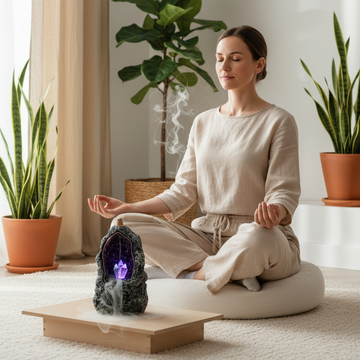

Short answer
-
A meditation cushion is a supportive seat designed to elevate the hips and stabilize your base so you can sit more comfortably during meditation. By gently raising the pelvis, it helps many people maintain a more natural spine position and reduces pressure on hips, knees, and ankles—especially during longer sessions.
Why a meditation cushion matters
Meditation sounds simple: sit down, breathe, and focus. But in real life, discomfort is the #1 reason people stop early. A cushion doesn’t “make you better at meditation”—it simply removes friction:
-
Less fidgeting
-
More stable posture
-
Easier breathing (because your spine is more upright)
-
Less pressure on joints
If you’ve ever thought, “I can’t meditate because my legs fall asleep,” a cushion is usually the cheapest fix.
What a meditation cushion actually does
A good cushion primarily changes one thing: hip height.
When your hips are low (especially on a hard floor), your pelvis tilts backward and your lower back rounds. That makes the posture feel like work. Elevating the hips slightly can:
-
Encourage the pelvis to tip forward to a neutral position
-
Help the spine stack more naturally
-
Reduce strain in the lower back and hip flexors
Common types of meditation cushions (and who they’re for)
1) Zafu (round cushion)
-
Best for: cross-legged sitting (easy pose, Burmese posture, half-lotus)
-
Why: supports the hips and helps knees drop toward the ground
-
Tip: choose height based on hip tightness (tighter hips often prefer slightly higher)
2) Zabuton (flat mat)
-
Best for: protecting knees/ankles on hard floors
-
Why: adds a soft base under your legs
-
Common setup: zabuton on the floor + zafu on top
3) Kneeling cushion / meditation bench cushion
-
Best for: kneeling posture (seiza)
-
Why: reduces pressure on ankles and makes kneeling sustainable
4) Ergonomic floor seat / modern meditation cushion
-
Best for: people who want more structured support, or who find traditional cushions still uncomfortable
-
Why: often designed to distribute pressure + promote upright posture with less effort
Who should use a meditation cushion?
You’ll likely benefit if you:
-
Are a beginner and can’t sit comfortably for 5–10 minutes
-
Have tight hips or knees that complain when sitting cross-legged
-
Meditate on hard floors
-
Want to build a daily routine without dreading the physical part
You may not need one if you:
-
Prefer meditating in a chair and already feel comfortable and upright
-
Only meditate lying down (e.g., yoga nidra—though cushions can still support knees/neck)
How to set up a cushion in 60 seconds
-
Place cushion on a stable surface (mat/rug helps prevent slipping)
-
Sit toward the front third of the cushion (not the center)
-
Let knees relax down; don’t force them
-
Imagine your spine stacking: pelvis → ribs → head
If discomfort persists, you probably need either:
-
A different height, or
-
A different posture (chair or kneeling)
Common mistakes to avoid
-
Too high: can strain knees if they float far above the floor
-
Too soft: makes you sink; posture collapses
-
Sitting too far back: rounds the lower back again
-
Forcing lotus: comfort > aesthetics
Internal links
CTA
FAQ
Is a meditation cushion only for “serious” meditators?
Not at all. It’s for anyone who wants comfort and consistency. Beginners often benefit the most.Do I need a zafu and a zabuton?
Not necessarily. If your knees/ankles feel pressure on hard floors, a zabuton helps. Otherwise a zafu alone can be enough.Can I use pillows from my couch instead?
Temporarily, yes—but many pillows are too soft and unstable. A dedicated cushion is designed to stay supportive. -